

Samsung and SK want memory to rise for another 5 years, while Apple, Xiaomi, and Huawei only want memory to collapse
The biggest contradiction in the entire technology industry at present is actually concentrated on storage chips.
Storage chip manufacturers hope that memory can continue to rise, preferably for 100 years, even if it can't rise for 100 years. If it rises for 10 years, or even worse, it will rise for 5 years until 2030.
So we see that storage manufacturers like Samsung, SK Hynix, Micron, etc. have been saying that memory prices will rise until 2030, which is actually sending a signal to everyone that memory prices will continue to rise in the next five years, and they should not think about a drop in memory prices.
In addition, there is another purpose for constantly saying that memory will rise until 2030, which is for memory manufacturers to shout at each other and suggest to their friends not to lower prices. Let's unite together to maintain prices.
For major players such as Samsung, SK Hynix, and Micron, the current memory market is really profitable. Samsung is expected to earn the same amount of money it has earned in memory over the past 40 years in 2026 alone. How exaggerated is this?
SK Hynix and Micron are not so exaggerated, but this year, the money earned in the past 10 or 20 years should not be much different.
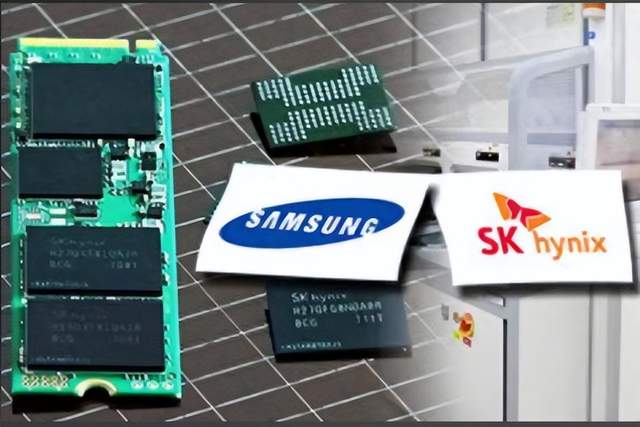
So from the perspective of Samsung, of course, we hope that the memory will continue to rise and never decline again, so that we can continue to make money and earn more money. As for the survival of the downstream, what does it have to do with them?
However, as downstream manufacturers, Apple, Xiaomi, and Huawei have conflicting positions with Samsung.
Apple, Xiaomi, Huawei, Lenovo and other manufacturers are those who want to buy memory with money. In the past year or so, in order to obtain memory, several major manufacturers have added tens of billions of yuan, which is also known as the "memory tax".
Xiaomi alone has paid nearly 10 billion yuan in memory tax for smartphones in the past three quarters. If we add big companies such as Apple, Huawei, and Lenovo, the annual "memory tax" of over 100 billion yuan is definitely not a problem.
The memory is too expensive, which has led to price increases for phones, computers, etc., and once the price increases, the product becomes difficult to sell.
So we see that the sales of mobile phones and PCs have both plummeted this year, especially in the third quarter, where they all fell by more than 20%. It is expected that they will continue to decline by 150-20% in the fourth quarter.
These downstream manufacturers are already struggling to catch their breath due to the price of memory. Everyone just hopes that memory will collapse quickly, so that they can buy memory at a cheap price. With lower costs, the prices of mobile phones and PCs can decrease, and sales will increase. Only then can their performance improve.
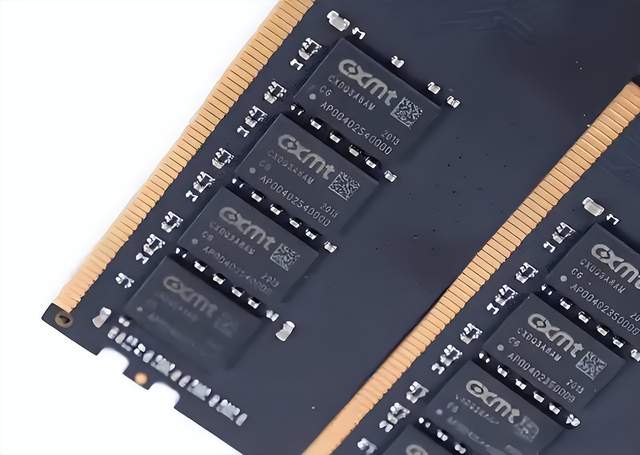
So, now both sides are pulling, with Samsung, SK Hynix, and Micron refusing to lower prices and maintain high prices. Therefore, they are unwilling to expand production, which is to keep the tense situation going.
And downstream companies such as Xiaomi, Apple, and Huawei, whose products are not selling well, only hope for a memory crash, so that everyone's pressure can be reduced and their products can sell better.
Don't doubt it, this contradiction is one of the biggest contradictions in the field of technology in the next one to two years. How will this contradiction be resolved in the end? Some people say that it depends on how fast China's storage chip production capacity expands. If the expansion is rapid, the time to resolve conflicts will be short. If it also joins forces with Samsung, the resolution of conflicts will be slow.
