


Changxin Technology's revenue for the first three quarters of 2026 is approximately 269 billion yuan, a year-on-year increase of 739%
Recently, Changxin Technology disclosed the minutes of the 2026 third quarter performance exchange meeting, introducing the company's revenue structure, process technology platform, and progress in the research and development of next-generation products. The company stated that the sales of DDR5 products continue to grow, driving a further increase in the revenue share of the DDR series; Driven by the demand for servers brought by AI applications, the supply shortage of DRAM is expected to continue, and revenue is expected to continue to grow in the fourth quarter.
Financial data shows that Changxin Technology achieved a revenue of approximately 269 billion yuan in the first three quarters of 2026, a year-on-year increase of 739%; In the third quarter, the operating revenue was 118.7 billion yuan, an increase of 19% compared to the previous quarter, and the net profit was 89 billion yuan, an increase of 19% compared to the previous quarter.
Along with the expansion of performance scale, the company's product structure is also undergoing changes, and the DDR series required by markets such as servers and personal computers are becoming new growth drivers.
DDR5 increases volume, driving changes in revenue structure
Changxin Technology's products are mainly divided into DDR series and LPDDR series. In the first half of 2026, the DDR series achieved a revenue of 69.472 billion yuan, accounting for 46.22% of the operating revenue; The LPDDR series achieved a revenue of 78.191 billion yuan, accounting for 52.02%. The combined contribution of the two major product series to the first half of the year's operating revenue was 98.24%.
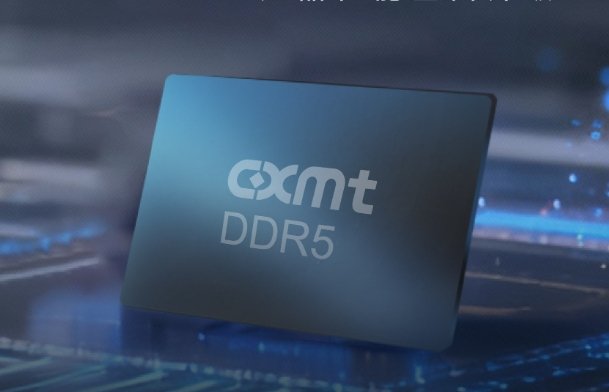
Compared with the first half of the year, the proportion of DDR series revenue in the first three quarters of the company continued to increase. Changxin Technology explained that the main reason is the continuous growth in sales of DDR5 products since the end of 2024, which has driven the overall revenue increase of the DDR series. However, the company did not disclose the specific revenue amounts and proportions of the two major series in the first three quarters in the minutes of this exchange meeting, so the relevant changes mainly reflect structural trends.
DDR stands for Double Data Rate Synchronous Dynamic Random Access Memory, mainly used in devices such as servers and personal computers; LPDDR emphasizes low-power characteristics and is widely used in smartphones, tablets, and other mobile terminals. The continuous increase in DDR5 volume means that Changxin Technology is further expanding into high value-added markets such as servers while maintaining the scale of its mobile storage business.
This change is closely related to the construction of AI infrastructure. AI servers not only require high-performance computing chips, but also larger capacity and higher bandwidth memory to support data processing. With cloud computing vendors and server customers accelerating the deployment of AI computing power, the market demand for products such as DDR5 has grown, providing new sources of revenue for DRAM vendors.
The fifth generation platform is in mass production, and the sixth generation platform has completed sample verification
In addition to upgrading the product structure, Changxin Technology has also disclosed the latest progress of its process platform. The fifth generation process technology platform is currently the most advanced platform in mass production for the company. Products launched based on this platform mainly include LPDDR5X packaged in 245Ball and 496Ball. In the future, the company will also use this platform to upgrade products such as DDR5 and LPDDR6, continuously improving performance and enriching product portfolio.
The company stated that the fifth generation platform produces at least 50% more bare wafers per wafer compared to the fourth generation platform, which has advantages in product energy efficiency and cost control, and will provide support for the subsequent expansion of mass production and commercial applications of LPDDR6.
At the same time, based on the key breakthrough in the 4F ² vertical channel DRAM architecture, Changxin Technology's sixth generation process technology platform has completed engineering sample verification. 4F ² is one of the important technological directions for further miniaturization of DRAM by reducing the storage unit area and increasing the storage density per unit area. The company adopts the method of bonding and stacking logic wafers and storage wafers, and introduces self-developed vertical surround gate transistors to improve gate control capability and create conditions for subsequent process iterations.
It should be noted that completing engineering sample validation does not equate to achieving mass production. In the future, customer validation still needs to be promoted and production needs to be arranged in conjunction with market demand. According to the company's plan, the first generation DDR5 RDIMM product with a 4F ² architecture is expected to be sampled by the end of 2026, with priority given to applications such as servers that require high capacity, density, and reliability.
AI demand continues, but attention still needs to be paid to industry cycle fluctuations
Looking ahead to the fourth quarter, Changxin Technology stated that the company still receives strong demand for its products from server customers, and the situation of DRAM supply shortage is expected to continue, with revenue expected to continue to grow. In addition to AI servers, intelligent terminals and automotive intelligence are also seen by companies as important sources of future demand.
From an industry perspective, AI is simultaneously driving the demand for high-performance computing memory, server DDR5, and low-power terminal memory. The competition among storage vendors is shifting from simply expanding production capacity to a comprehensive competition of processes, product portfolios, and customer verification capabilities. For Changxin Technology, the high volume of DDR5, mass production of the fifth generation platform, and research and development of the sixth generation platform constitute the two main lines of short-term revenue growth and medium - to long-term technological upgrading.
However, the DRAM industry has obvious cyclicality, and product prices, customer inventory, and manufacturer expansion pace may all affect the supply and demand pattern. The new technology platform also has a validation cycle from sample delivery to bulk shipment. Whether the strong demand in the fourth quarter can be transformed into sustained growth still depends on investment in AI infrastructure, product yield, capacity release, and downstream customer procurement pace.
