


The US, Japan, the Netherlands, and Germany are in big trouble. In two years, China's self-sufficiency rate in chip equipment will reach 52%!
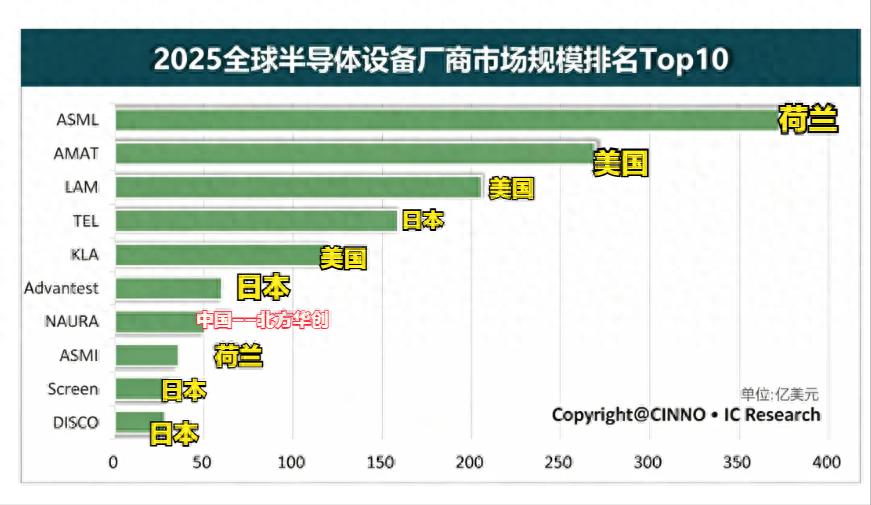
The following chart shows the rankings and revenue of the top 10 semiconductor equipment companies worldwide in 2025.
These top 10 companies have taken over more than 90% of the global market share, effectively monopolizing the market. Among these top 10 companies, three are from the United States, two from the Netherlands, four from Japan, and only one from China made the list.
If it were two years ago, no Chinese company would have been on the list, with all spots taken by Japan, the United States, and the Netherlands.
So, without a doubt, over the past so many years, China has continuously been purchasing semiconductor equipment from the United States, Japan, and the Netherlands in order to make chips.
Data also shows that at its peak, even around 45% of semiconductor equipment worldwide was sold to the Chinese market. Whether it is companies from the United States, Japan, or the Netherlands, the proportion of equipment sold to China is the highest.
For example, in 2024, the top five equipment manufacturers together accounted for as much as 43% of equipment sales to China, and everyone was making a lot of money in the Chinese market.
However, the market has always been changing, and as the localization rate of Chinese chip equipment increases, the big troubles for chip equipment companies from the U.S., Japan, and the Netherlands are gradually arriving.
In the past, China imported a large number of these devices from overseas, but now that domestic devices are being used, naturally fewer are imported from abroad.
As shown in the figure below, this is the institution's projection of China's self-sufficiency rate for chip equipment from 2017 to 2028.
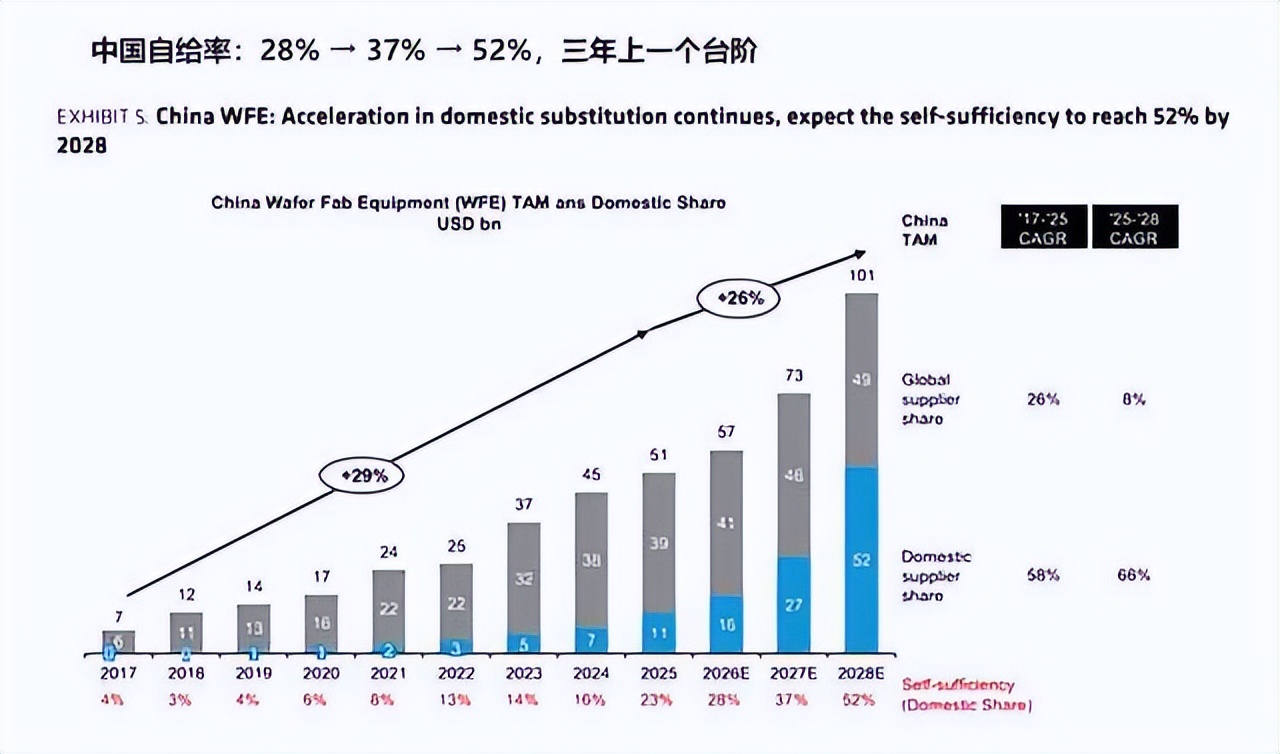
In 2017, it was 4%, pitifully low, almost entirely dependent on imports, but by 2025 it had reached 23%, more than five times the original, and it is expected to be around 28% in 2026, but by 2028, it is expected to reach 52%.
52% means that half of the chip equipment is entirely domestically produced, so naturally, less is imported from overseas. So, may I ask, who are the buyers of the equipment made in the United States, Japan, and the Netherlands?
Let me give the simplest example, so everyone can understand. The figure below shows the proportion of American equipment in chips imported by China.
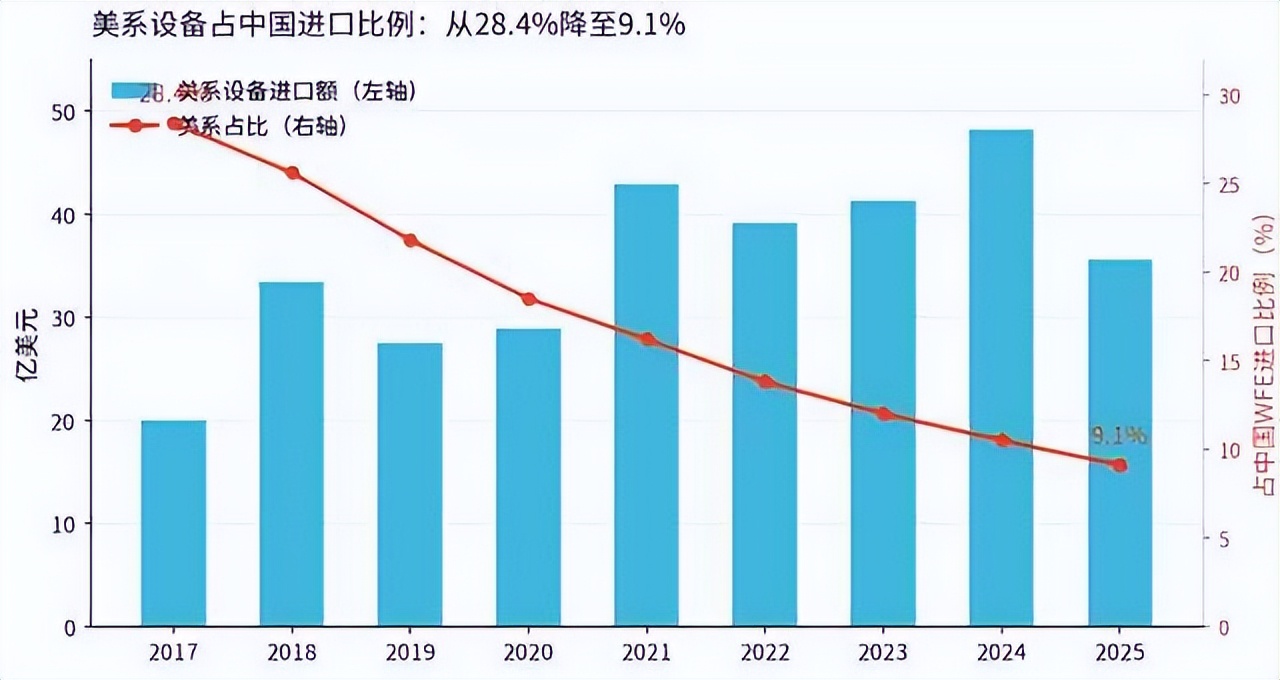
It can be seen that in 2017, the proportion of equipment imported by China from the United States was as high as 28.4%, meaning that nearly three out of every ten pieces of equipment were imported from the United States. By 2025, this proportion dropped to 9.1%, which means that out of every ten pieces of equipment, about one is imported from the United States, resulting in American chip equipment manufacturers selling two fewer pieces of equipment to China.
Once China achieves a 52% self-sufficiency rate, Japan and the Netherlands will face similar problems, namely selling fewer and fewer devices to China. So how can they ensure their income and performance? Isn't this a big headache for them?
It should be noted that currently China has the fastest growth in chip manufacturing in the world and also has the greatest potential. Once China reduces its purchases, other countries and regions around the world will not be able to keep up, and their performance will inevitably fall very badly.
