


Behind the GPU shortage, TSMC can produce 400 million chips a year, so why is it still so tight?
As everyone knows, AI chips—the familiar GPU—have skyrocketed in recent years.
The reason for the crazy price is partly due to high demand. The global AI infrastructure is continuously expanding, which indeed requires a large number of GPUs. Second, GPUs are in short supply; the GPU chips provided by NVIDIA are far from meeting everyone's needs.
According to institutions, the current global GPU demand gap exceeds 30%, which is why GPU shortages, longer delivery times, and persistently high prices have occurred.
Many people believe that TSMC has not allocated advanced process capacity to Nvidia, resulting in insufficient capacity. Perhaps Nvidia is doing this intentionally to maintain high prices, since capitalists prioritize making money.
In fact, GPU shortages have nothing to do with TSMC's advanced manufacturing processes.
If we look at the capacity of processes below 7nm, and using TSMC's capacity, TSMC's current capacity can cut at least 400 million NVIDIA GPU dies per year. But in reality, Nvidia's annual deliveries are only about 10 million units. If expanded 40 times more, TSMC's capacity would be no problem.
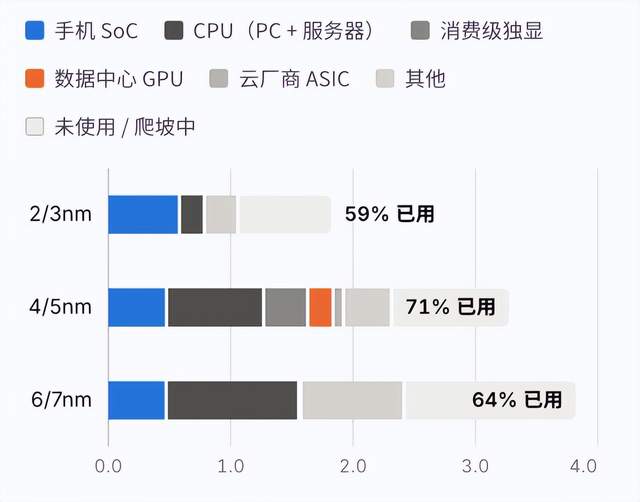
Currently, all of NVIDIA's GPU chips use TSMC's 4/5nm process, and TSMC's 4/5nm process is not fully loaded; above that, there are 3nm and 2nm processes, and TSMC has not given NVIDIA any of them.
So, if NVIDIA wants to increase production capacity and even needs processes like 2nm or 3nm, TSMC can produce more for NVIDIA. In reality, NVIDIA doesn't need 2nm or 3nm.
So where exactly is the reason? It's actually in CoWos packaging and HBM memory supply.

<span style="font-size: 18px; "Let's > first look at CoWos packaging. Currently, TSMC's CoWoS packaging capacity is about 100,000 units per month, but not all of this can go to Nvidia. All GPUs can get roughly 66%, and over a year, GPU capacity is roughly 10 million units. According to institutional tests, just in the GPU segment, the CoWos capacity gap is as high as 20%."
Looking at HBM memory, although Samsung, SK Hynix, Micron, and others have it, they still can't meet GPU demand. According to the data, HBM's annual production capacity is only 3.75 EB, with about 70% of GPUs allocated. Each GPU needs an average of 260GB, which can only support 10 million GPUs.

Therefore, looking at CoWos and HBM production capacities, the current global capacity to produce 10 million GPUs a year is already the limit. TSMC will likely hand over all its advanced processes to NVIDIA. Producing hundreds of millions of dies a year is not a problem, but HBM is insufficient and packaging capacity is insufficient, so ultimately it cannot meet NVIDIA's demand.
Currently, TSMC is expanding CoWos, while Samsung is expanding HBM capacity, etc. Only when these problems are solved will GPUs no longer be out of stock and prices will drop. But neither Samsung nor TSMC will expand quickly. You know why, because only by maintaining a certain gap can prices go higher and profits be better
