


600,000 NVIDIA H200 chips are stuck in Hong Kong, as China has not approved large-scale imports
Reuters recently cited multiple "insiders" reporting that about 600,000 NVIDIA H200 AI chips are currently stored in Hong Kong, awaiting shipment to Chinese mainland. Although Chinese tech companies have purchasing demand, China has not yet approved large-scale imports. This news has not been confirmed by Chinese or U.S. officials or Nvidia, but it has already made some Americans uneasy—some American think tank insiders said it is "hard to understand" why China is so cautious about Nvidia, and some media say China is "choking itself."
Small-scale release, large-scale "holding back."
Based on Reuters reports and relays from Asia Daily, Daily Economy, and other media, three insiders said that in recent months, China has allowed some H200 chips to enter the country: several major Chinese internet companies have each received about 10,000 chips; A small number of chips were also shipped into China through intermediaries and indirect channels, but the exact quantity is unknown.
Review timeline: In mid-January 2026, Chinese customs conveyed a policy not allowing H200s to enter Chinese mainland and urged domestic companies to restrain unnecessary purchases; At the end of January, Reuters reported that Chinese authorities had conditionally approved Alibaba, ByteDance, and Tencent to purchase over 400,000 H200 units; In March, NVIDIA obtained permission to sell H200 to several Chinese customers; In August, ByteDance and Tencent each received about 10,000 units. However, import licensing and actual entry into the mainland are two different issues; large-scale deliveries of hundreds of thousands of units have yet to be approved.
supply tightness is directly reflected in pricing. According to insiders, as of the end of October 2026, a server equipped with eight H200 graphics cards is priced at over 6 million RMB in mainland, about three times the price from a year ago; while newer Blackwell chip servers subject to US export controls are priced at over 20 million RMB per unit.
The "double checkpoint" between U.S. policy shifts and corporate ledgers
In fact, there are two independent checkpoints in this supply chain: Washington permits exports under certain conditions, Beijing decides whether to import in large quantities. On December 8, 2025, U.S. President Trump announced permission to export H200 and other products to approved Chinese customers; On January 13, 2026, the U.S. Department of Commerce's Bureau of Industry and Security issued regulations requiring case-by-case review of export license applications for H200, AMD MI325X, and similar chips sold to China, with conditions including: the relevant exports must not reduce the global semiconductor capacity available to U.S. customers, Chinese buyers must establish export compliance procedures, and products must undergo independent third-party testing in the U.S.
Nvidia's financial report reveals the commercial cost. In its quarterly report ending July 26, 2026, Nvidia disclosed that starting February 2026, the U.S. license allows a small portion of H200 to be exported to certain Chinese customers, but Chinese restrictions prevent the company from selling all products covered by the license; The company has set aside $400 million in expenses for excess H200 inventory and procurement obligations in the first half of fiscal year 2027, with actual shipments accounting for less than 1% of data center business revenue during the reporting quarter. NVIDIA assesses that the company has effectively been excluded from competition in China's data center computing market.
The list of options for domestic substitution is being rewritten
Why is the Chinese market no longer "rushing in"? Media analysis provides partial answers: although the H200 is not the latest Blackwell architecture, it is based on the Hopper architecture, equipped with 141GB HBM3e video memory and 4.8TB/s bandwidth, delivering inference performance twice that of the H100, making it still practical; But domestic substitution has quickly caught up—
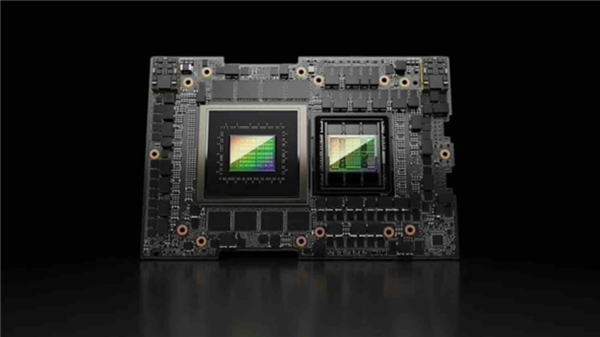
The Muxixiyun C600 is equipped with 144GB HBM3e memory and will be mass-produced in May 2026. It is the first high-performance GPU built on a domestic supply chain;
Wang Tao, Huawei's rotating chairman, stated that the Ascend 960DT and 960PR outperform NVIDIA's H200 SXM, with the 960PR providing 2 PFLOPS FP8 computing power, HBM supporting up to 288GB and bandwidth 9.6TB/s. The Ascend series will maintain an annual iteration pace.
Korean media analysis also points out that China's continued restrictions on large-scale imports are mainly due to considerations for the development of its domestic semiconductor industry: if reliance on NVIDIA's advanced chips increases, it may hinder the growth of Chinese chip companies like Huawei; China prioritizes domestic semiconductors in actual inference operations and is concerned that China's AI ecosystem is overly dependent on American chips.
US media rhetorically ask: Who is "choking"?
In response to the US rhetoric of "hard to understand" and "choking ourselves," Global Times Quick pointed out: In 2022, the US imposed high-end chip export controls on China under the pretext of "national security," repeatedly increasing measures to reduce NVIDIA's market share in China's AI chip market to about 30% of previous years; Now that Washington has lifted export licenses for the H200 to China, the essence is to sell these chips that have already been produced but lag behind two generations of top-tier products; A deeper calculation is to keep Chinese companies tied to the existing ecosystem by selling relatively outdated chips, delaying the iteration of China's independent chips. The article states that today's Chinese market is no longer at the stage of "whatever the US releases, we must procure"—when purchasing chips, companies must first consider long-term stable supply, sustainable technological routes, and secure and controllable supply chains.
600,000 H200 chips stranded in Hong Kong reflect two checkpoints and two calculations on the same supply chain: on one side, Washington wants to sell inventory that is "two generations behind," on the other, the Chinese market is rebalancing its own technology route with supply security. Hardware in storage does not equal usable computing power—and who will ultimately pay for this deadlock is clearly reflected in prices, financial reports, and the mass production schedule of domestic chips
