

Huang Renxun and Hai Lishi share the same view! Samsung warns of tight supply of storage chips, with shortages expected to worsen next year
On October 30th, Samsung Electronics publicly issued an industry warning during its latest earnings conference call, stating that the current tight supply of global storage chips will not ease in the short term, but will further deteriorate in 2027. The overall supply constraint is expected to continue until 2028, with a much longer cycle than previously predicted by the industry.
Jaejune Kim, Executive Vice President of Samsung's Storage Business, revealed at the meeting that based on the industry wide customer orders and demand estimates received by the company, the supply pressure in the entire storage market is expected to be even more severe in 2027 than in 2026, and the supply-demand gap will further widen.
He explained that the storage chip industry usually takes several years to build new wafer fabs and establish new production capacity, from the start of factory construction to the smooth completion of final capacity ramp up and production. This means that before 2028, the entire industry will hardly see large-scale new supply releases that can change the current supply and demand pattern.
In order to cope with the continuous explosion of AI computing power storage demand, Samsung is making every effort to promote the production capacity layout of advanced storage products. The company directly disclosed that the full production capacity of HBM4 high bandwidth memory, which was originally planned to be put into operation in 2027, has now been pre booked by major customers, and there is no excess capacity to be released externally.
The new generation HBM4E high bandwidth memory product, which is being promoted synchronously, is planned to officially start mass production in the first half of 2027, and gradually increase the overall shipment scale in the second half of the year to fill the high-end storage gap in the market as much as possible.
It is worth noting that this is not the first time that top storage manufacturers have publicly issued a supply shortage warning. Recently, another storage giant SK Hynix also explicitly stated in its latest financial report that the global storage supply shortage is expected to continue until 2030.
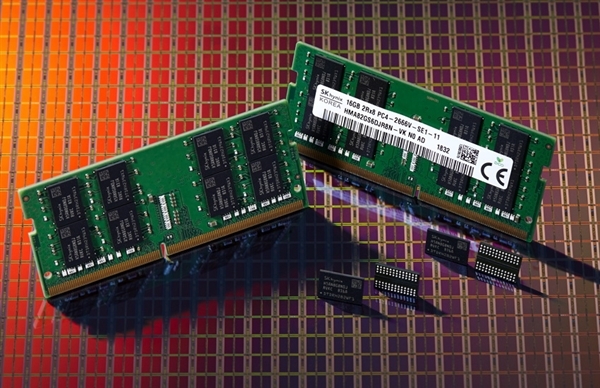
SK Hynix stated that although the company is accelerating the expansion of production capacity for various product lines regardless of cost, it takes time to digest the new manufacturing production line from investment and construction to formal stable output. The newly added production capacity in the short term cannot fully catch up with the explosive growth of market demand.
More radical than the predictions of the two storage vendors is the statement made by NVIDIA CEO Huang Renxun in a public media interview. He believes that at least until 2029, the global memory chip industry will not experience the comprehensive overcapacity situation that many people were concerned about before, and supply shortage will be the industry norm for many years to come.
Huang Renxun explained in an interview that the special attribute of memory, the core component of computing power, determines that the entire industry can always find enough landing scenarios to digest more memory capacity. There is no situation where the production capacity is so high that it cannot be used up. The training and reasoning of AI large models, various end side intelligent devices, and data center construction will continue to consume all newly produced storage chips.
Now all the top manufacturers in the global computing power industry chain have reached a consensus that the demand for storage chips brought about by the outbreak of the AI industry is a long-term increment, rather than a short-term pulse like market trend. In the next few years, the prices of high bandwidth memory and large capacity general-purpose storage chips are likely to maintain a high upward trend, and the overall prosperity cycle of the storage industry is much longer than previously predicted by the market.
