


From mobile phones to overseas IoT: New sound filters enter the Indian, Japanese, and Korean markets in bulk
The necessary condition for AI to extend from the digital world to the physical world is the interconnection of all things. Globally, an increasing number of devices such as smart meters, industrial equipment, and vehicle terminals are becoming capable of real-time networking, remote management, and data exchange. This provides a foundation for the large-scale implementation of physical AI and also brings new market opportunities for wireless communication core components such as RF filters.
Recently, Xinsheng Semiconductor, a leading domestic RF filter enterprise, has made new business progress in overseas markets. The company has achieved bulk supply of multiple filter products to L&T Semiconductor Technologies (LTSCT) in India and AM Telecom in South Korea, with the Korean customers' related products targeting the Japanese M2M (Machine to Machine) communication module market.
It is reported that the products entering the mass production delivery stage this time include duplexers, quadruplers, etc., covering multiple mainstream 4G LTE frequency bands, using different technology platforms such as SAW, TC-SAW, TF-SAW, etc.
It is worth noting that this overseas market expansion is not limited to the consumer electronics field that Xinsheng Semiconductor has already formed a scale in, but enters into overseas IoT application scenarios such as smart meters and M2M communication.
From domestic and international smartphone supply chains to local semiconductor companies in India and communication module manufacturers in South Korea, Xinsheng Semiconductor is introducing its domestically produced RF filter products, which have already achieved large-scale production, into more diverse overseas application markets.
The large market for Indian electricity meters and new opportunities for domestic filters
India is becoming one of the most closely watched markets in the global smart meter industry.
As a country with a population of over 1.4 billion, India has been continuously promoting the digital upgrading of its power grid in recent years. To address issues such as distribution losses, electricity cost recovery efficiency, and electricity management, the Indian government launched the Distribution Sector Reform Scheme (RDSS) in 2021 to promote the large-scale deployment of smart meters.
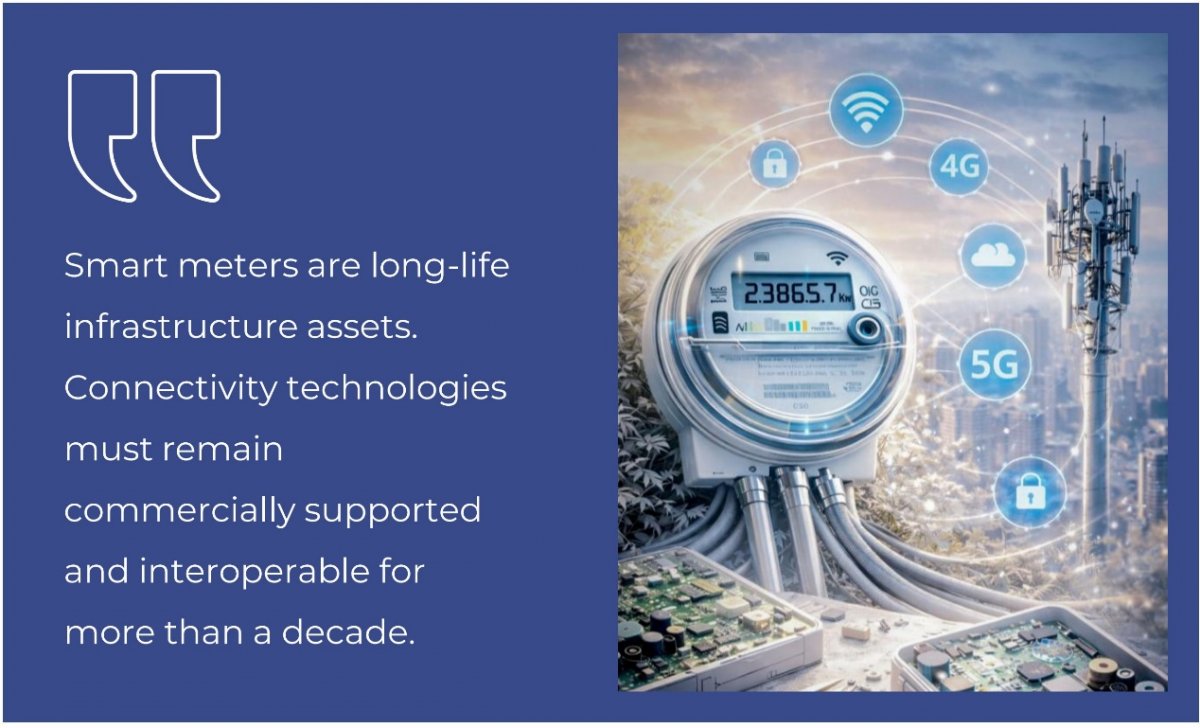
According to the overall plan of the Indian government, the deployment scale of smart meters nationwide is about 250 million. This means that India is advancing a digitalization project for its power infrastructure covering hundreds of millions of terminals.
With the promotion of policies, the installation scale of smart meters continues to grow. According to data released by the Indian government in 2026, the cumulative installed number of smart meters in the country has exceeded 60 million, and will further exceed 70 million by mid-2026.
Despite the continuous expansion of deployment scale, there is still considerable room for improvement from the overall planning goals.
Compared with traditional electricity meters, smart meters require automatic collection of electricity consumption data, remote meter reading, prepaid management, and equipment status monitoring. Among these applications, 4G cellular communication technology has become one of the important connectivity solutions due to its extensive network coverage and mature communication ecosystem.
A smart meter that supports cellular communication typically requires components such as RF filters, power amplifiers, and RF switches to work together in the communication module to achieve stable data transmission.
Considering that smart meters often need to operate outdoors, in high temperatures, or in complex electromagnetic environments for a long time, relevant communication devices also need to consider performance stability, reliability, and supply cycle.
Therefore, the continuous expansion of the deployment scale of smart meters in India is driving the demand for communication modules and upstream RF devices.
In this market context, Xinsheng Semiconductor has successfully entered the supply chain of L&T Semiconductor Technologies in India.
LTSCT is a wholly-owned semiconductor subsidiary of Larsen&Toubro (L&T), a large industrial group in India. It is also one of the key local Fabless semiconductor enterprises in India, with business covering multiple fields such as automotive, industrial, energy, and communication.
Since 2026, LTSCT has accelerated its layout in the cellular IoT market and launched the LCC40 series communication module based on LTE Cat 1 bis technology, focusing on applications such as smart meters, industrial IoT, asset tracking, and payment terminals. In September, LTSCT also announced a partnership with Indian power equipment company Capital Power Systems to jointly develop a local 4G IoT communication module for smart meters.
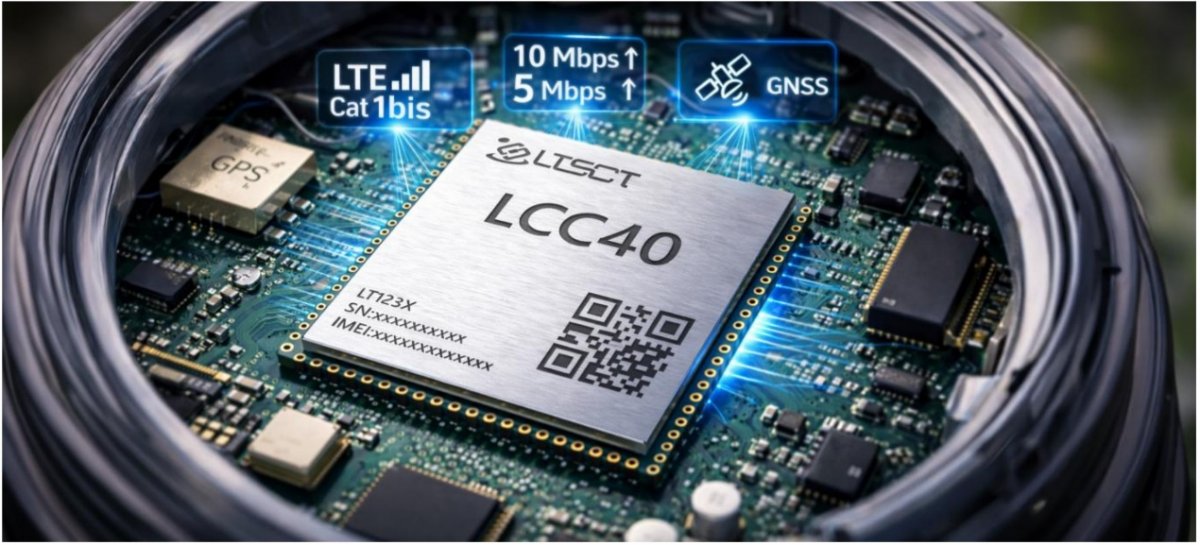
The cooperation between New Sound Semiconductor and LTSCT is an important development in its participation in the Indian cellular IoT industry chain.
According to the material information for this mass production, Xinsheng Semiconductor has supplied three RF filters in bulk to LTSCT, including a Band 1/Band 3 quadrupler based on TF-SAW technology, as well as duplexers covering Band 5 and Band 8 frequency bands respectively.
Among them, the TF-SAW quadrupler can integrate multiple transmit and receive filtering functions in a single device, reducing the RF front-end area of the communication module while meeting the requirements of multi band communication. The other two duplexers use SAW and TC-SAW technologies respectively to meet the RF performance and application requirements of different frequency bands.
From a business perspective, the entry of Xinsheng Semiconductor into the LTSCT supply chain not only means the addition of an overseas semiconductor customer, but more importantly, its filter products are beginning to participate in the actual mass production supporting of India's local IoT communication industry chain.
Against the backdrop of India's continuous promotion of large-scale deployment of smart meters and acceleration of local semiconductor industry chain construction, this cooperation provides a new business foundation for Xinsheng Semiconductor to further expand into the local energy IoT and other industrial communication markets.
Entering the Korean supply chain and delivering to the Japanese market
If India represents the incremental demand brought about by the digitization of infrastructure, then Japan is a mature market with high technological requirements in the fields of communication modules and industrial IoT.
The progress of Xinsheng Semiconductor in the Japanese and Korean markets this time comes from its cooperation with South Korean communication equipment company AM Telecom.
AM Telecom was founded in 2001 and has long been engaged in the research and manufacturing of wireless communication equipment, M2M modules, and related terminal products. It has product development experience in the fields of public safety communication, vehicle communication, and industrial Internet of Things.
It is reported that Xinsheng Semiconductor has supplied three RF filters in bulk to AM Telecom for its M2M communication modules targeting the Japanese market. Specifically, the related products include a Band 26 duplexer using TC-SAW technology, as well as two receiving filters covering Band 8 and Band 26 frequency bands respectively.
Compared to consumer electronic devices, the application scenarios of M2M modules are more dispersed, and products usually need to meet the characteristics of long-term online, complex operating environments, and high maintenance costs. Especially in mature communication markets such as Japan, equipment manufacturers have high requirements for the performance consistency, temperature stability, and long-term supply capability of RF devices.
For upstream RF device companies, entering the mass production supply chain of such customers not only requires meeting RF performance indicators, but also undergoing customer product validation, production consistency assessment, patent risk investigation, and supply capacity assessment.
The mass delivery of new sound semiconductor related products this time means that its domestic RF filters have completed the mass production import of AM Telecom related projects and entered the Japanese market through overseas communication module manufacturers. This also reflects a realistic path for domestic filters to expand overseas: by cooperating with communication module enterprises with local market resources and product development capabilities, gradually entering the terminal supply chain of different countries and regions.
From consumer electronics to the Internet of Things, domestic filters broaden new scenarios
In the past few years, with the continuous increase of R&D investment by domestic RF filter enterprises, the competitiveness of domestic manufacturers in the consumer electronics field such as smartphones has been continuously improved, and some enterprises have the ability to supply international terminal brands on a large scale.
But from a global market perspective, the application scope of RF filters is far beyond smartphones. Smart meters, industrial communications, in vehicle terminals, payment devices, asset tracking, and other cellular IoT scenarios also require reliable RF connectivity capabilities. With the increasing intelligence and networking rate of these devices, the demand for RF devices in the relevant market is also continuously released.
Compared with consumer electronics, the industrial Internet of Things market presents different demand characteristics. On the one hand, its terminal applications are highly dispersed, and the shipment scale of a single product may not necessarily reach the level of mainstream smartphones; On the other hand, some industrial terminals have longer product lifecycles and higher requirements for device reliability, long-term supply, and platform compatibility.
This means that suppliers not only need to have filter design capabilities, but also need to have a product portfolio covering different frequency bands, technical processes, and packaging specifications to meet diverse customer needs. In addition, in the field of RF devices, product competitiveness ultimately needs to be tested through large-scale production.
Founded in 2021, Xinsheng Semiconductor has established a product system covering BAW, SAW, TC-SAW, TF-SAW, IPD and other technology routes, forming a combination of filters and RF front-end products covering the main communication frequency bands below 6GHz.
At present, the company has achieved mass production of more than 150 products, with a cumulative global shipment of over 2.5 billion units. The products have entered the terminal supply chains of domestic and foreign brands such as Xiaomi, Samsung, Honor, Motorola, Lenovo, OPPO, vivo, etc.
From smartphones to industrial Internet of Things, although the terminal form and customer needs are different, the core technology, product development capabilities, and mass production experience of RF devices have a certain degree of reusability.
The batch delivery of projects to customers in India, Japan, and South Korea indicates that Xinsheng Semiconductor is further extending its accumulated technology and large-scale delivery capabilities in the consumer electronics field to overseas IoT markets.
For domestic filter companies, this also means that their opportunities to participate in the global RF front-end industry competition are expanding from some consumer electronics sub markets to a wider range of terminal application areas.
Physical AI accelerates development, RF connectivity is expected to experience explosive growth
The overseas market expansion of Xinsheng Semiconductor also reflects a long-term change that is happening in the intelligent terminal industry. As artificial intelligence gradually moves from the digital world to the physical world, physical AI is becoming an important direction of concern for the global technology industry.
From embodied intelligent robots, autonomous vehicle to intelligent factories and autonomous running equipment, AI is gradually extending from a software system focusing on information processing to an intelligent system that can perceive the environment, understand the state and interact with the real world. This change not only requires stronger computing power, but also puts forward new requirements for the perception, communication connection, and real-time data interaction of terminal devices.
In the technical architecture of physical AI, computation is responsible for information processing and decision-making, sensors are responsible for obtaining environmental information, and communication connections undertake data exchange tasks between devices and networks, cloud, and other terminals.
As an important component of wireless communication systems, the performance of RF front-end directly affects the communication quality and connection stability of terminal devices.
Of course, current applications such as smart meters and M2M modules are not equivalent to physical AI terminals, and their technical requirements differ significantly from cutting-edge applications such as embodied intelligence and autonomous driving. However, from the perspective of industrial evolution, whether it is the digital transformation of traditional equipment or future intelligent terminals with stronger autonomous perception and decision-making capabilities, reliable connectivity is an important foundation for achieving device collaboration and data interaction.
As intelligence extends from personal terminals such as smartphones and computers to energy, transportation, industry, and other physical infrastructure, the application boundaries of wireless communication devices will also expand accordingly. This trend provides new development space for RF filter enterprises, and also means that enterprises need to adapt to more diverse application scenarios, more complex customer needs, and longer product delivery requirements.
From the Indian smart meter industry chain to the M2M communication module for the Japanese market, Xinsheng Semiconductor is entering the overseas IoT market through specific mass production projects.
Compared to breakthroughs in a single customer or project, what is more noteworthy is that domestic RF filters have begun to extend from large-scale applications in the consumer electronics field to a wider range of smart terminals and industrial connectivity scenarios worldwide.
