


Xi Jinping: Joining hands to build an Asia-Pacific community with a shared future
One
The interests of Asia-Pacific economies are intertwined, sharing a common destiny; if one prospers, one prospers; if one suffers, all suffer. Within this dynamically balanced chain, each economy developswill trigger a chain reaction for other economies. We must firmly establish the awareness of an Asia-Pacific community with a shared future, use our own development to drive others' development, maximize each other's strengths through coordinated linkage, spread positive energy, and form a pattern of healthy interaction and coordinated development among economies.
(Speech at the APEC Business Leaders Summit held in Bali, Indonesia, on October 7, 2013)
Two
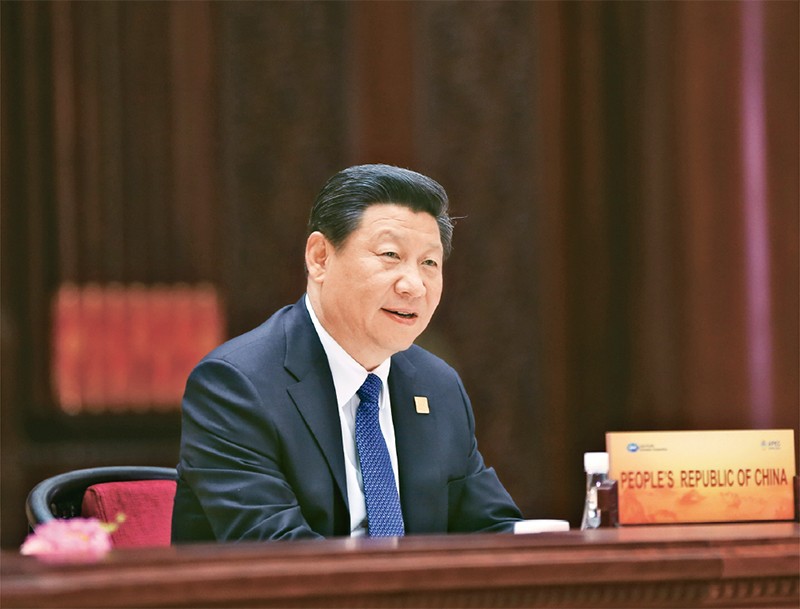
A great era requires a grand vision, and a grand vision requires great wisdom. The development prospects of the Asia-Pacific depend on today's decisions and actions. We have a responsibility to create and realize the Asia-Pacific Dream for the people of this region. This dream is to uphold the spirit of the Asia-Pacific family and the awareness of a community with a shared future, follow the trends of peace, development, cooperation, and win-win outcomes, and jointly commit to the prosperity and progress of the Asia-Pacific; It means continuing to lead the global development trend and making greater contributions to human well-being; It means making the economy more dynamic, trade freer, investment more convenient, roads smoother, and people closer to each other; It means enabling people to live more peaceful and prosperous lives, allowing children to grow better, work better, and live better.
(Speech at the opening ceremony of the APEC Business Leaders Summit held in Beijing on November 9, 2014)
Three
China is gradually expanding into the Asia-Pacific, and the Asia-Pacific is also moving toward China. China has become the main trading partner and export market for the vast majority of APEC members.
Everyone knows that Latin America is the birthplace of sweet potatoes and other tuber crops. I have given examples of sweet potatoes to some Chinese entrepreneurs. The vines of sweet potatoes extend in all directions, but their tubers always grow at the root position. By the same logic, no matter how far China develops, it will take root in the Asia-Pacific, build it, and benefit the Asia-Pacific. China is firmly committed to the path of peaceful development, pursuing a mutually beneficial and win-win opening-up strategy. While pursuing its own development, it actively promotes the common development of Asia-Pacific countries and creates more opportunities for the people of the region.
(Keynote speech at the APEC Business Leaders Summit held in Lima, Peru, on November 19, 2016)
Four
The birth and development of APEC have aligned with the historical trend of openness and integration, the strong desire for development in the Asia-Pacific region, and the common needs of peoples to work together to meet challenges. The openness and cooperation of the Asia-Pacific not only stir the Pacific Ocean but also energize the oceans of the world economy. Today, the Asia-Pacific is the world's most dynamic and promising economic sector, and is globally recognized as an important engine of global economic growth.
(Keynote speech at the APEC Business Leaders Summit held on November 17, 2018, in Port Moresby, Papua New Guinea)
Five
This year, an important task for APEC is to launch the post-2020 cooperation vision, and we have achieved the goal of jointly building an Asia-Pacific Community. We should take this as a new starting point, open a new stage of Asia-Pacific cooperation, continue the strong development momentum of the Asia-Pacific region, welcome a prosperous future for the Asia-Pacific, and jointly build an Asia-Pacific community with a shared future that is open and inclusive, innovatively growing, interconnected, and win-win.
(Speech via video at the 27th APEC Informal Leaders' Meeting on November 20, 2020)
Six
Openness is the only path for the prosperity and progress of human society. For more than 30 years, from the Bogor Goals to the Putrajaya Vision, from macroeconomic policy coordination to the construction of high-standard free trade zones, the Asia-Pacific region has maintained rapid development over a long period. Ultimately, this is thanks to efforts to build an open economic framework and to building an Asia-Pacific partnership based on mutual trust, inclusiveness, cooperation, and win-win outcomes.
No matter how the world situation evolves, the Asia-Pacific economy's strong resilience and momentum will not change. All parties should open their minds, grasp the overall trend, actively expand openness, promote trade and investment liberalization and facilitation, maintain the stability and smooth operation of industrial and supply chains, facilitate the orderly flow of resources and factors, drive economic recovery, and achieve coordinated development. We must look forward and move forward, opposing discriminatory and exclusive practices. Drawing lines based on ideology and forming geopolitical cliques ultimately has no future. The Asia-Pacific region cannot and should not return to the Cold War-era state of confrontation and fragmentation.
(Keynote speech via video at the APEC Business Leaders Summit on November 11, 2021)
Seven
Ten years ago, I proposed the idea of promoting the building of a community with a shared future for mankind. The APEC's Putrajaya Vision clearly proposes building an Asia-Pacific Community by 2040, pointing the way for Asia-Pacific cooperation. In recent years, in response to urgent global needs, I have proposed the Global Development Initiative, Global Security Initiative, and Global Civilization Initiative, aiming to promote joint efforts among all parties to tackle various global challenges, promote global common development, and enhance the well-being of all humanity. China is willing to work with all Asia-Pacific parties to promote the implementation of these initiatives and jointly build a world of lasting peace, universal security, common prosperity, openness and inclusiveness, and a clean and beautiful world.
(Written speech at the APEC Business Leaders Summit held in San Francisco, USA, on November 16, 2023)
Eight
The success of the Asia-Pacific stems from our constant commitment to maintaining regional peace and stability, our commitment to genuine multilateralism and open regionalism, and our consistent alignment with the trend of economic globalization, our commitment to mutual benefit, win-win, and mutual achievement.
Looking ahead, Asia-Pacific must continue to be the locomotive driving economic globalization. We must uphold integrity and innovation, polish the golden brand of an open and inclusive Asia-Pacific, create a new brand for a green Asia-Pacific and a digital Asia-Pacific, promote the building of an Asia-Pacific community with a shared future, and create the next "Golden Thirty Years" of Asia-Pacific development.
(Written speech at the APEC Business Leaders Summit held in Lima, Peru, on November 15, 2024)
Nine
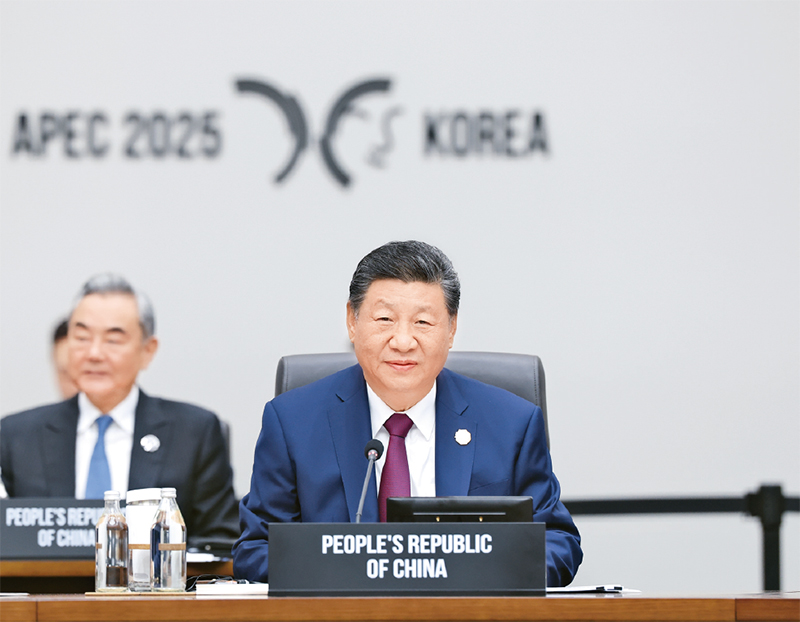
APEC was established in response to the wave of economic globalization, with the aim of promoting trade and investment liberalization and facilitation, supporting economic growth, and prosperity. In 1991, the APEC South Korea Conference issued a declaration emphasizing that all parties should be interdependent and benefit together. Today, as we gather again in Korea, we should revisit the original intention of founding APEC, aiming to make outstanding contributions to the world through more dynamic and resilient Asia-Pacific cooperation.
First, take the lead in maintaining peace and stability. We must insist that all countries, regardless of size, strength, or wealth, have the right to participate equally in international affairs. Adhere to a common, comprehensive, cooperative, and sustainable security concept, resolving differences and disputes through dialogue and consultation.
Second, take the lead in implementing openness and integration. We must firmly uphold the multilateral trading system centered on the WTO and based on rules, strengthen solidarity and cooperation, oppose protectionism, resist unilateral bullying, and avoid the world returning to the law of the jungle. Dare to "tear down walls," maintain the stability and smooth flow of global industrial and supply chains, promote regional economic integration and the construction of the Asia-Pacific Free Trade Area, and contribute Asia-Pacific strength to global economic growth.
Third, take the lead in maintaining win-win cooperation. We must uphold the concept of harmony but diversity, fully leverage the prominent diversity and characteristics of Asia-Pacific economies, promote complementary advantages, jointly expand the Asia-Pacific cooperation pie, balance our own interests with those of others, and form a cooperative pattern where countries achieve mutual success and develop together.
Fourth, take the lead in promoting inclusiveness and benefit. We must adhere to a people-oriented approach, fully implement the United Nations 2030 Agenda for Sustainable Development, deepen the alignment of development strategies, increase support for developing economies, better bridge the development gap, continuously improve people's well-being, and promote common prosperity for all Asia-Pacific people.
Next year, China will host APEC for the third time, reflecting China's high regard and sense of responsibility for Asia-Pacific cooperation. China will follow the trend of the times, listen to the voices of all members, and work hand in hand with all parties to build the Asia-Pacific Community, injecting new momentum into peace and development in the Asia-Pacific and the world.
(Written speech at the APEC Business Leaders Summit held in Gyeongju, South Korea, on October 31, 2025)
Ten
APEC is the most important economic cooperation mechanism in the Asia-Pacific region and has made significant contributions to promoting growth and prosperity in the region. Building the Asia-Pacific Community is the only way to achieve long-term development and prosperity in the Asia-Pacific region, and it is also the shared vision of all parties. In 2026, China will host APEC for the third time. China is willing to take this opportunity to work hand in hand with all parties to build the Asia-Pacific Community, promote growth and prosperity in the region, focus on advancing practical cooperation in the Asia-Pacific Free Trade Area, connectivity, digital economy, artificial intelligence, and other areas, inject greater vitality and momentum into Asia-Pacific development, and benefit the people of the Asia-Pacific even more.
(Speech at the host handover session of the 32nd APEC Informal Leaders' Meeting held in Gyeongju, South Korea, on November 1, 2025)
