


Exploring the Secret to the Success of 'China's Governance' — The Comprehensive Strict Governance of the Party in the New Era Brings Profound Insights to the Construction of Political Parties Worldwide
In the golden autumn, Beijing has become the focus of the world’s attention.
From October 26 to 29, the Fifth Plenary Session of the 20th Central Committee of the Communist Party of China (CPC) was held in Beijing to deliberate on major issues concerning the persistent advancement of full and rigorous self-governance of the Party.
“To forge iron, one must be strong oneself.” In the new era, guided by Xi Jinping’s thinking on Party building, the CPC—the world’s largest political party, steadfastly striving to become the world’s most powerful—has demonstrated the political courage to turn the blade inward. By advancing full and rigorous self-governance, the Party has blazed a successful trail for addressing its own challenges while in long-term power, effectively breaking the historical cycle of the rise and fall of regimes. In doing so, it has reached a new frontier in the management, governance, revitalization, and strengthening of a century-old political party.
To understand China today, one must understand the Communist Party of China. This significant meeting also offers the world a vital window into the secrets behind the success of “governance in China.”
Ensuring the Enduring Vitality of the Party through Full and Rigorous Self-Governance
From the first document on combating corruption and graft issued by the CPC Central Committee in 1926, to the “Six Points of Attention” inscribed on a soldier’s knapsack cover during the Jinggangshan struggle, and through the series of internal Party regulations formulated and revised since the 18th National Congress of the CPC—the exhibits at the Museum of the Communist Party of China chronicle the magnificent journey of a political party that has been tempered and forged into steel through rigorous trials.
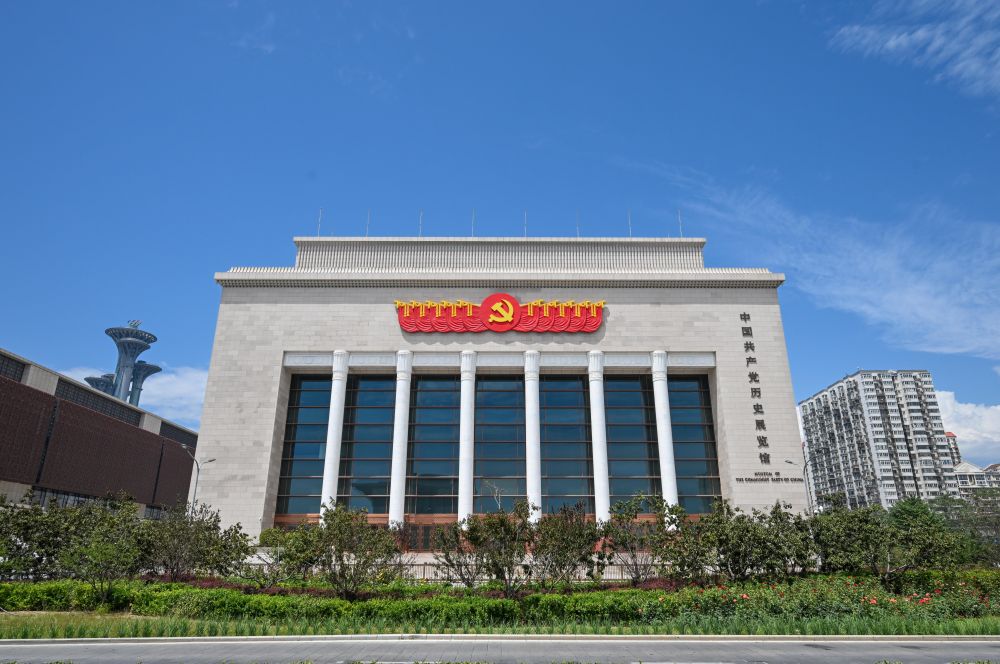
An exterior view of the Museum of the History of the Communist Party of China (photographed on June 9, 2025).
Since the museum opened more than five years ago, nearly 300 foreign political party delegations—invited by the International Department of the CPC Central Committee—have visited this "spiritual sanctuary" of the Communist Party of China (CPC). Many arrived with the same question: At a time when party politics in many countries faces various predicaments, why does the Communist Party of China exhibit such vibrant vitality and remarkable resilience?
Some nations are mired in partisan strife and social unrest; others have long endured conflict and disorder. Even countries that have long touted themselves as "models of democracy" are now grappling with issues such as political polarization, social fragmentation, and governance failure. According to the World Values Survey (2017–2022), the average level of public trust in political parties across 39 countries stands at a mere 17.1%.
Gyula Thürmer, Chairman of the Hungarian Workers' Party, noted that since the 18th National Congress of the CPC, the CPC Central Committee—with Comrade Xi Jinping at its core—has committed to rooting out the "cancer" of corruption through comprehensive and rigorous self-governance. By requiring officials at all levels to exercise strict self-discipline, fulfill their duties diligently, and foster a clean political atmosphere, the Party has strengthened its capacity to resist corruption and degeneration—earning widespread support and endorsement from the people.
At the gatherings celebrating the 105th anniversary of the founding of the Communist Party of China and commemorating the 90th anniversary of the victory of the Long March of the Chinese Workers' and Peasants' Red Army, General Secretary Xi Jinping emphasized the need to "persevere in advancing comprehensive and rigorous self-governance." This underscores the CPC’s clear-eyed recognition and long-term strategic thinking regarding the enduring and arduous nature of governing and disciplining the Party.
Corruption poses the greatest threat to the stability of a regime, and combating it requires the most thoroughgoing self-revolution. How to prevent corruption, how to detect and investigate it, and how to eradicate the breeding grounds that allow it to flourish—these are common challenges faced by political parties across the globe. Between the 18th and 20th National Congresses of the Communist Party of China (CPC), more than 500 centrally-managed officials were placed under investigation. In 2025 alone, the CPC Central Commission for Discipline Inspection and the National Supervisory Commission directly handled or supervised 8,116 cases involving misconduct and corruption affecting the general public. Furthermore, between the 19th and 20th National Congresses, the "Sky Net" operation led to the recovery of 6,900 fugitives who had fled abroad.
In the face of corruption, the CPC has remained steadfast in its efforts to "take down tigers" (high-ranking officials), "swat flies" (low-level officials), and "hunt down foxes" (fugitives abroad). The scale and scope of this anti-corruption campaign are rare in both global and historical terms, demonstrating the Party’s firm resolve to "turn the blade inward" and excise its own "corrupt tissue."
Frederick Idehai, president of the Association of Foreign Correspondents in Nigeria, noted that the CPC’s "zero-tolerance" stance toward corruption is deeply impressive. Zakarni, a member of the Fatah Revolutionary Council in Palestine, remarked that by "turning the blade inward," the CPC has successfully forged a path for anti-corruption with Chinese characteristics. Increasingly, other nations and political parties are recognizing that the CPC possesses not only the courage to confront problems head-on but also the capability to resolve them.
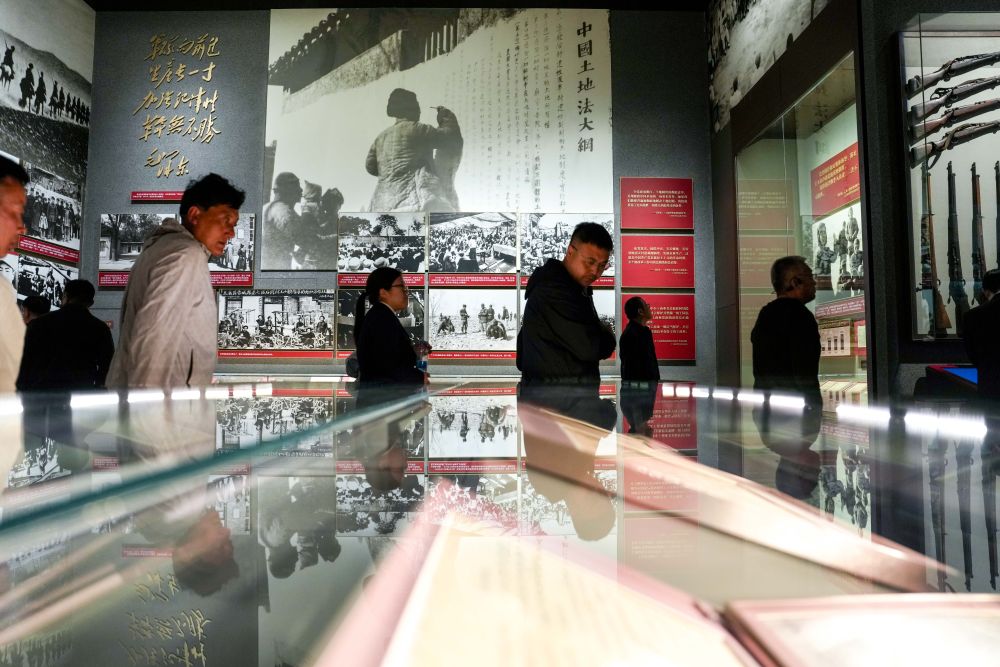
Visitors tour the Exhibition Hall of the History of the Communist Party of China (photographed on April 24, 2025).
Self-revolution—this is the second answer discovered by the Communist Party of China (CPC) in the new era—through its unwavering commitment to exercising full and rigorous self-governance, and through continuous, in-depth practical exploration and theoretical reflection—to the question of how to escape the historical cycle of rise and fall.
General Secretary Xi Jinping has pointedly remarked: "Looking across the globe, no other political party takes its own development as seriously as the Communist Party of China, nor does any other party pursue self-revolution with such a high degree of self-awareness, a scientific approach, and a systematic methodology. This is a distinct strength of our Party and a key to our success in leading the times."
Deepak Devkota, a Nepali scholar who holds a PhD in International Political Communication from Shenzhen University, notes that the significance of Xi Jinping’s thought on Party building for political parties worldwide lies in its comprehensive, systematic framework for governing and managing the Party: remaining firmly rooted in the people, persistently combating corruption, pursuing long-term goals, and engaging in inter-party exchanges based on equality and mutual respect.
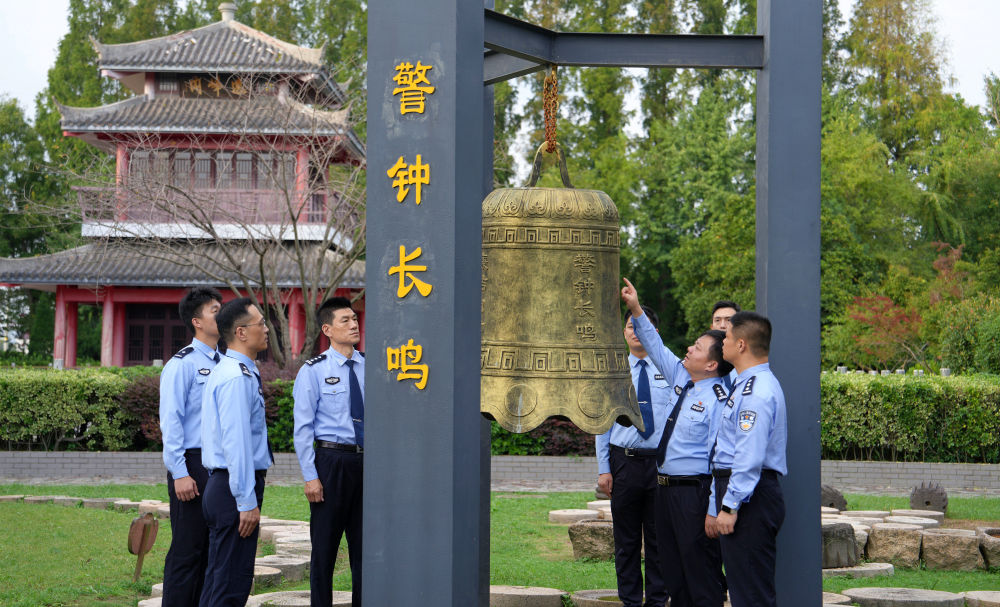
Police officers who are also Communist Party members from the Binhai New Area Police Station in Haian City, Jiangsu Province, visit an integrity education base to receive a cautionary lesson (photographed on September 29, 2026).
The "Eight-point Regulation" of the CPC Central Committee—a "golden calling card" for the conduct of the Communist Party of China in the new era—is not only transforming China but also exerting an influence on the world.
In May 2025, a five-member delegation from Ghana’s National Democratic Congress (NDC), led by the party’s chairman, Johnson Asiedu Nketiah, visited China. While in Jiangsu, the delegation made a special visit to the Party School of the Jiangsu Provincial Committee of the CPC (Jiangsu Academy of Governance) to attend a thematic briefing on the study and implementation of the spirit of the Central Committee’s Eight-point Regulation.
Nketiah noted that while strengthening conduct is easy to understand in theory, it is challenging to put into practice—with success hinging on effective implementation. He observed that by having leadership set an example, the CPC Central Committee has fostered a culture where integrity, self-discipline, and the regulated exercise of power have become second nature for officials at all levels. This, he added, has provided the NDC with valuable insights into improving conduct, combating corruption, and rooting out deep-seated malpractices.
Since coming to power in late 2024, the Janatha Vimukthi Peramuna (JVP)—or People's Liberation Front—of Sri Lanka has consistently sent high-level party officials to China to "learn the ropes" regarding the CPC’s approach to exercising full and rigorous self-governance. Ratnayake, a member of the JVP Politburo and Sri Lanka’s Minister of Transport, Highways, and Urban Development, stated that his party has translated the Eight-point Regulation (along with its detailed implementation rules) and the system of internal CPC regulations into their own language, distributing them throughout the party for study.
An increasing number of foreign political figures, experts, and scholars view the CPC’s "full and rigorous self-governance" as the "governance code"—a key to how the Party continuously strengthens itself and enhances its leadership capacity—offering a new, referenceable path for party-building globally. The practice of full and rigorous self-governance provides highly valuable lessons for political parties elsewhere that are seeking to modernize their national governance systems and improve their capacity for national governance.
Guiding "Governance in China" Toward a Vibrant New Era
On the afternoon of March 12, 2026, at the Great Hall of the People. The Fourth Session of the 14th National People’s Congress adopted a resolution on the Outline of the 15th Five-Year Plan. Spanning over 70,000 characters across 18 parts and 62 chapters, the Outline presents a comprehensive blueprint for China’s high-quality development over the next five years. The continuous, decades-long endeavor—from the First Five-Year Plan to the 15th—has brought about the remarkable and multifaceted transformation of China’s development.
Looking globally, many nations have no shortage of blueprints; what they often lack is the capacity to turn those blueprints into reality. The world asks: How is it that a country with a population of over 1.4 billion can transform a development blueprint—originating as a proposal from the ruling party—into the national will, and then carry it through every level and every sector, without it becoming distorted along the way, interrupted by changes in leadership, or losing momentum during implementation?
To govern the country well, one must first govern the Party well; only when the Party thrives can the nation grow strong.
To understand "governance in China," one must first understand the "governance of the Communist Party of China (CPC)." General Secretary Xi Jinping has emphasized that, given the vital importance of the Party’s long-term governance, the nation’s enduring stability, and the well-being of the people, the comprehensive and rigorous self-governance of the Party must be treated as a long-term strategy and an eternal mission.
Yahya, a member of the organizing committee for the Coordination Committee of Parties’ Youth Leaders and Politicians in Egypt, noted that the CPC’s persistent efforts to strengthen Party discipline and its unyielding stance against corruption have resulted in a highly organized structure with strict discipline. This, he observed, is the key to the CPC’s strong cohesion and combat effectiveness—the secret to its ability to lead the Chinese people in overcoming difficulties and challenges.
By the end of 2025, the total number of primary-level CPC organizations reached 5.431 million, forming a rigorous organizational system that spans from the central level down to local and grassroots levels. Like an arm directed by the mind and fingers directed by the arm, the top-level design reaches the very "nerve endings" of implementation, ensuring that the decisions and deployments of the CPC Central Committee are carried out to the letter.
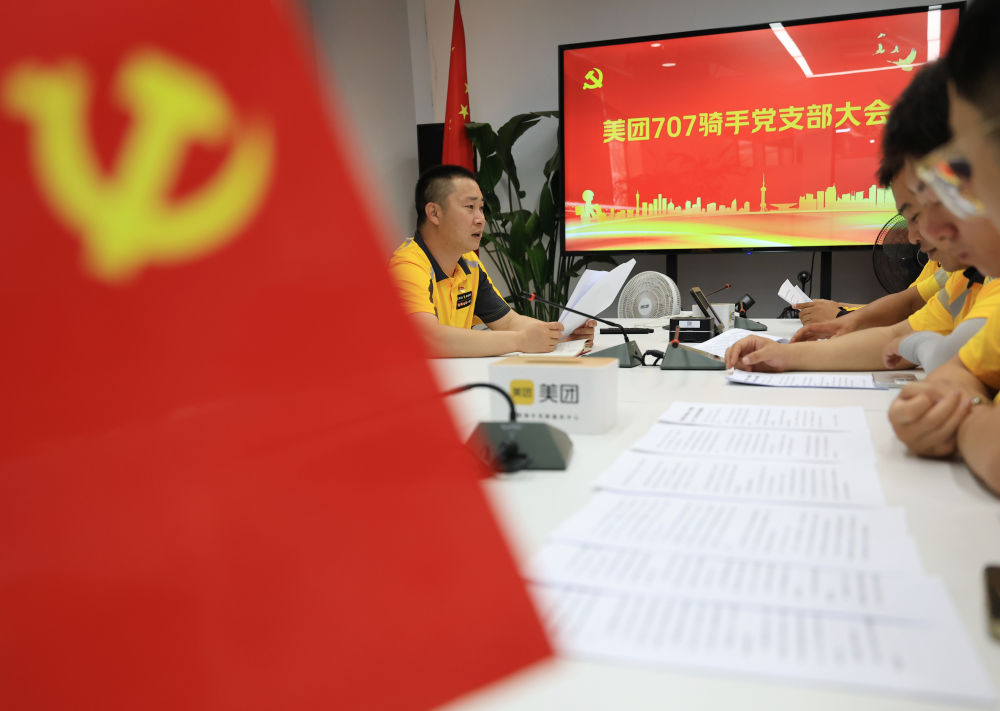
Gao Feng, a recipient of the title "National Outstanding Communist Party Member" and secretary of the Party branch for Meituan delivery riders (Group 707) in Beijing, speaks at a branch meeting (photographed on June 18, 2026).
From winning the battle against poverty to protecting the blue skies, clear waters, and clean soil, and accelerating the drive toward high-level self-reliance and strength in science and technology—at every turn, Party organizations at all levels have responded immediately to the call, building solid strongholds, while Party members and officials have taken the lead and shouldered their responsibilities, forging one development miracle after another.
Systems provide a fundamental and long-term framework; the advantages of a system are the greatest strengths a political party or a nation can possess.
On New Year’s Day 2024, the revised *Regulations of the Communist Party of China on Disciplinary Action* came into effect. On June 1, 2025, the amended *Supervision Law of the People’s Republic of China* and its implementing regulations also took effect—the "fences" of institutional oversight are being drawn ever tighter.
A comprehensive system of intra-Party regulations has taken shape, encompassing everything from disciplinary action and accountability regulations to rules on intra-Party supervision and the first-ever set of regulations for the work of commissions for discipline inspection. Furthermore, the enactment and revision of the Supervision Law, the establishment of the National Supervisory Commission, the extension of supervision to cover all public officials, the refinement of the legal and regulatory framework for discipline inspection and supervision, and the deepening of reforms to the discipline inspection and supervision system—all these efforts have strengthened the governance of the Party through systems and regulations. A systematic, comprehensive, scientifically standardized, and effectively functioning institutional framework has continued to mature, with these institutional advantages increasingly translating into the remarkable efficacy of "governance in China."
Lydia, a researcher at the National Research and Innovation Agency of Indonesia, noted that under the leadership of General Secretary Xi Jinping, the Communist Party of China (CPC) has enforced its rules and regulations with growing rigor. By taking decisive action to investigate and punish violations of law or discipline by its members, the CPC has not only helped maintain China’s political stability but has also provided the international community with a clearer understanding of the Party’s strict and well-defined discipline.
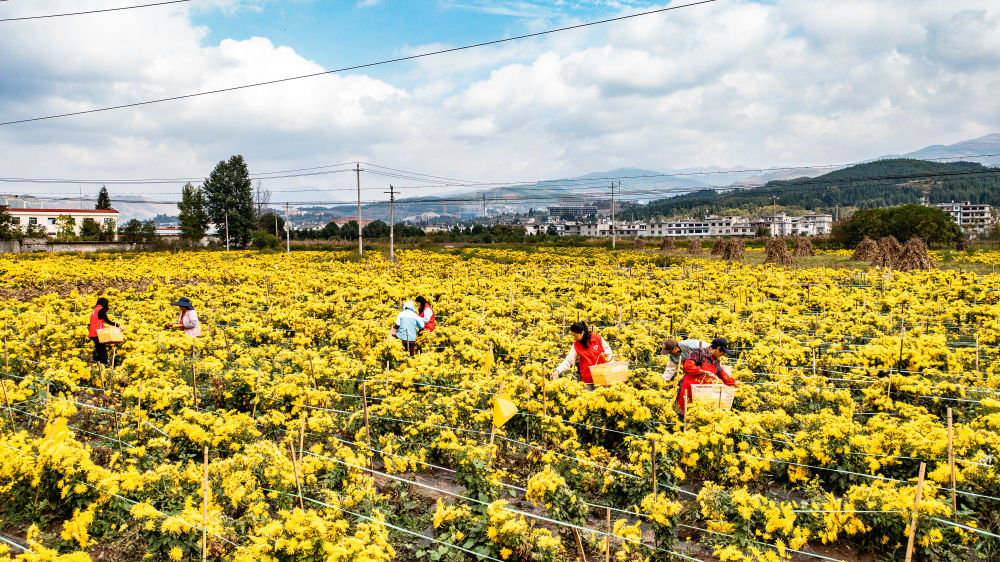
Villagers and volunteer Party members harvest "Jinfeng" chrysanthemums at a cultivation base in Dawan Town, Zhongshan District, Liupanshui City, Guizhou Province (drone photo, taken on October 19, 2024).
The country is its people, and the people are the country. The comprehensive and rigorous governance of the Communist Party of China (CPC) is, at its core, about safeguarding the hearts of the people.
Why are the Chinese people willing to follow the CPC and offer it their wholehearted support? The answer lies in the Party’s unwavering, people-centered stance.
From the ongoing efforts to address misconduct and corruption at the grassroots level to the campaign against the "four forms of decadence" (formalism, bureaucracy, hedonism, and extravagance) and the promotion of a new, upright ethos, the Party resolutely prevents and corrects whatever the people oppose or detest. In doing so, it translates the achievements of its comprehensive and rigorous governance into tangible, visible improvements in the people’s well-being.
The Democratic Front of Cyprus has noted that the primary duty of a ruling party is to ensure the happiness and well-being of its people; the high-quality life enjoyed by the Chinese people is inseparable from the CPC’s commitment to comprehensive and rigorous governance.
The CPC represents the fundamental interests of the overwhelming majority of the Chinese people. It has no special interests of its own, nor does it ever represent the interests of any specific interest group, power bloc, or privileged class.
The CPC’s governing philosophy—which places the people above all else—is gaining recognition from an increasing number of political parties and organizations worldwide. Debabrata Biswas, General Secretary of the All India Forward Bloc, remarked that a political party can only earn the trust of the people by maintaining its organizational purity, upholding its ideals and beliefs, and strictly adhering to its moral responsibilities. By continuously refining its governance, strengthening its institutional framework, and enforcing strict discipline, the CPC has further solidified the public’s confidence in its leadership.
In exploring the "secret" behind the success of China’s governance, many international observers emphasize that a political party earns the sincere support of the people by consistently working for their interests, and it sustains its long-term vitality through the genuine recognition and backing of the people. The most direct yardstick for measuring a political party’s governance capacity is etched into the trajectory of a nation’s development and reflected in the changes in the lives of its people. The Communist Party of China (CPC) has steadfastly advanced full and rigorous self-governance; by effectively governing itself, it has steered and safeguarded the "governance of China," while contributing to the progress of human political civilization through the wisdom of the East.
Enriching the Garden of Global Political Civilization
"Political parties play a vital role in the political life of a nation and serve as a significant force in driving the progress of human civilization." In December 2017, General Secretary Xi Jinping articulated the profound mission shouldered by political parties to leaders of parties from around the world.
By upholding full and rigorous self-governance—integrating the Party’s internal oversight with supervision by the people—the CPC has shattered the myth that the Western model is the only viable path for political parties. In doing so, it has expanded the theory and practice of party building, enriched the diverse garden of global political civilization, and offered new insights into the oversight and restraint of power within political parties worldwide.
On the desk of Gennady Zyuganov, Chairman of the Central Committee of the Communist Party of the Russian Federation, lies a copy of *Xi Jinping: The Governance of China*. He has studied it thoroughly and included it on a list of essential reading for his party.
"The Communist Party of the Russian Federation should learn from the CPC’s spirit of 'self-revolution'—its willingness to turn the 'blade inward'—and carefully study its experience in combating corruption." Zyuganov has frequently organized collective study sessions for senior party officials on the subject of full and rigorous self-governance, and has engaged in in-depth exchanges with the CPC.
"Through the strengthening of its own organization, the Communist Party of China effectively holds its members accountable for their actions. It ensures that every member fulfills their duties in their respective roles across society, which ultimately translates into tangible development outcomes for the nation," remarked Sione Vuna Fa'otusia, Deputy Prime Minister of Tonga.

Young Party members from Dongbaihu Town, Zhuji City, Zhejiang Province, work alongside staff from the reservoir management center to clear trash and identify potential hazards within the water source protection area of the Chencai Reservoir (photographed on August 14, 2026).
The remarkable development achievements of China in the new era have prompted an increasing number of foreign political parties to seek a deeper understanding of the "secret" behind the Communist Party of China’s (CPC) successful governance. From Asia to Africa, and from Latin America to Europe, political parties are turning their attention to the CPC’s practice of exercising full and rigorous self-governance, hoping to find keys to resolving their own challenges.
The Cambodian People’s Party, drawing inspiration from the CPC’s approach of targeting both "tigers" (high-ranking corrupt officials) and "flies" (low-level corrupt officials), has adopted an anti-corruption strategy of catching both "big fish" and "small fish." Tanzania’s Chama Cha Mapinduzi (Revolutionary Party) has introduced its own version of the "eight-point regulation" on improving conduct, modeled after the CPC’s central eight-point regulation. Meanwhile, Spain’s People’s Party has established an "oversight office" for the party, modeled after the CPC’s internal supervision mechanisms.
Vladimir Voronin, honorary chairman of the Party of Communists of the Republic of Moldova and former president, noted that the CPC possesses the courage to confront its own problems and the resolve to continuously self-correct and innovate. The success of the CPC’s anti-corruption campaign serves as further proof that a communist party can be a vibrant and competitive political force.
At the invitation of the International Department of the CPC Central Committee, Solly Mapaila, General Secretary of the South African Communist Party (SACP), has led several delegations of senior officials to visit China in recent years. He candidly shared that the SACP has explored the establishment of a disciplinary committee to address issues of corruption and lax discipline among the leadership of South Africa’s national democratic revolution. "We look forward to learning from the CPC’s experience and practices in exercising full and rigorous self-governance."
"When the great way prevails, the world is shared by all." The practical experience gained by the Communist Party of China in exercising full and rigorous self-governance and advancing the fight against corruption is increasingly becoming a "public good" for global governance, offering valuable insights for the world in tackling the complex challenge of corruption. At the 22nd APEC Economic Leaders' Meeting in 2014, China proposed vigorously promoting anti-corruption cooperation across the Asia-Pacific, establishing the APEC Anti-Corruption and Transparency (ACT) network, and facilitating the adoption of the *Beijing Anti-Corruption Declaration*. During the 19th G20 Leaders' Summit in 2024, China announced eight major actions to support global development—including the implementation of the G20 Anti-Corruption Action Plan. Through these significant global multilateral platforms, General Secretary Xi Jinping has consistently championed international anti-corruption cooperation.
By grasping the core issues, all other matters fall into place. Through concrete actions, China has continuously steered global anti-corruption governance toward greater fairness, justice, and effectiveness:
China has consistently attached great importance to—and fully fulfilled—its obligations under the *United Nations Convention against Corruption*. It has actively promoted anti-corruption cooperation within multilateral frameworks and provided long-standing financial support for anti-corruption projects led by the United Nations Office on Drugs and Crime (UNODC).
China has deeply advanced the development of a "Clean Silk Road," providing a safeguard for the high-quality construction of the "Belt and Road Initiative." It has signed memoranda of understanding on anti-corruption cooperation with counterpart agencies in many countries and incorporated the building of a "Clean Silk Road" into bilateral cooperation documents with dozens of nations.
my country has hosted international training programs and seminars on anti-corruption, sharing expertise and experience with officials from anti-corruption agencies across various countries.
……
In recent years, an increasing number of foreign leaders, while visiting China, have traveled to different parts of the country. Through these on-the-ground visits, they have gained a comprehensive and nuanced understanding of the real China: a China where the Communist Party of China (CPC) demonstrates the courage to engage in rigorous self-reform; earns the trust of the people through strict discipline and exemplary conduct; and harnesses its formidable organizational capacity to forge a collective force for development. It is precisely this strong and capable governing party that has led China along a path to modernization suited to its own national conditions—a path that has created a new form of human civilization.
This year marks the beginning of the "15th Five-Year Plan" period. China is now advancing the cause of building a great country and achieving national rejuvenation on all fronts through Chinese-style modernization. The Communist Party of China has consistently advanced full and rigorous self-governance and shared its practical experience in governing the Party and the country. In doing so, it has provided Chinese wisdom and Chinese approaches to support political parties worldwide—especially those in the Global South—in forging governance paths suited to their own national conditions, while also contributing to the development of global political civilization.
