


Xi Jinping: Advance full and rigorous governance over the Party with higher standards and more concrete measures
The "15th Five-Year Plan" period is a critical phase for laying a solid foundation and making a comprehensive push toward the basic realization of socialist modernization. To turn the blueprint outlined by the Fourth Plenary Session of the 20th Central Committee of the Communist Party of China into reality, we must uphold and strengthen the overall leadership of the Party, unremittingly advance full and rigorous self-governance of the Party, reinforce the sense of mission and the determination to strive among all Party members, consolidate the unity and solidarity of the Party, ensure the purity of the Party’s ranks, and enhance the Party’s capacity for governance and leadership.
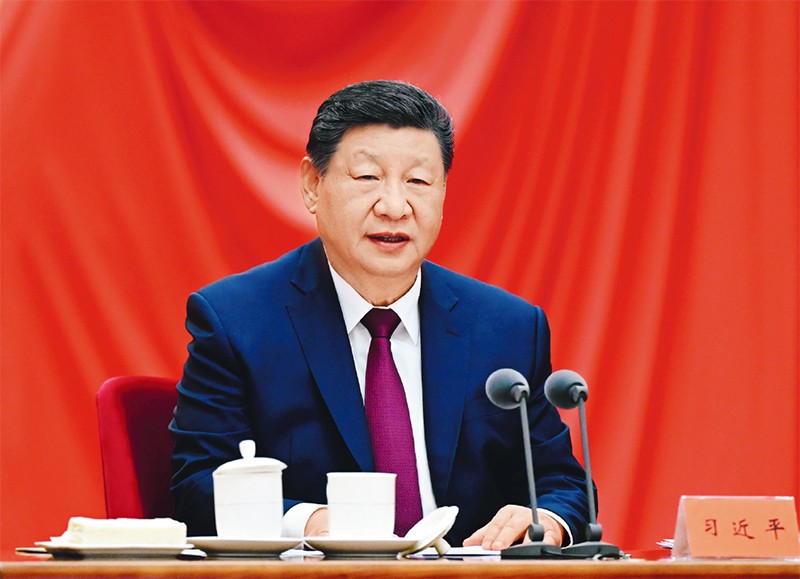
On January 12, 2026, Xi Jinping, General Secretary of the CPC Central Committee, President of the PRC, and Chairman of the Central Military Commission, delivered an important speech at the fifth plenary session of the 20th Central Commission for Discipline Inspection of the Communist Party of China.
I. Implementing the Major Decisions and Plans of the CPC Central Committee with Greater Resolve and Vigor
Implementing the major decisions and plans of the CPC Central Committee is a fundamental requirement for upholding the authority and the centralized, unified leadership of the Central Committee; it is also a vital historical lesson drawn from the continuous development and progress of the cause of the Party and the people. The Communist Party of China was born out of ideals and has fought for its mission. It is precisely under the strong leadership of the CPC Central Committee that generations of Communists—undaunted by hardships and striving in succession—have successfully led the Chinese people from a semi-colonial, semi-feudal society to a position where they have stood up, grown prosperous, and become strong, thereby blazing the right path of socialism with Chinese characteristics. We have now reached a critical stage in the basic realization of socialist modernization. On the road ahead, we will inevitably face major tests—ranging from high winds and rough seas to perilous, stormy conditions. As long as we hold fast to our ideals, cherish our nation, and shoulder our mission, we will be able to take a broad view, bolster our confidence and strength, and overcome any difficulty—ensuring that we are never overwhelmed by challenges. By fostering a sense of unity across the entire Party and the whole nation, we can effectively implement the major decisions and plans of the CPC Central Committee, pooling our collective strength to conquer every formidable obstacle—every "Loushan Pass" or "Lazikou"—that stands in our way. Party organizations at all levels, as well as all Party members and officials, must enhance their sense of political responsibility and historical mission. They should embrace the Party’s original aspiration as their own, regard the Party’s mission as their very life, and channel all their wisdom and energy toward fulfilling the Party’s central task. Leading officials at all levels must, with the Party’s mission and tasks in mind, cultivate and practice a correct understanding of what constitutes a "job well done" (a correct view of political achievement). They must constantly reflect on whether their thoughts and actions have strayed from the lofty ideal of communism or the common ideal of socialism with Chinese characteristics; whether they have departed from the fundamental purpose of serving the people wholeheartedly; whether they have drifted away from the Party’s line, principles, policies, and the major decisions and plans of the Central Committee; or whether they have become detached from China’s national realities or the specific conditions of their own regions and departments. With a spirit that seeks no personal credit for success while ensuring that one’s own contribution is an essential part of that success, they must focus single-mindedly on advancing Chinese-style modernization.
Our Party possesses a robust mechanism for implementing the major decisions and strategic plans of the Party Central Committee, and, on the whole, this mechanism functions smoothly and effectively. At the same time, findings from inspections, audits, and supervisory reviews indicate that issues such as the failure to implement—or the improper implementation of—these major decisions and plans still persist, and in some areas, these problems are quite pronounced. It must be made clear that the implementation of the Party Central Committee’s major decisions and strategic plans is a fundamental requirement of the Party’s political discipline and political rules. Our emphasis on "upholding the core status of General Secretary Xi Jinping and the centralized, unified leadership of the Party Central Committee" (the "Two Upholds") and maintaining a high degree of alignment with the Party Central Committee must be reflected in concrete actions to carry out its major decisions and plans; it cannot be reduced to empty slogans, and certainly not to a situation where one says one thing but does another. Anyone who violates these requirements must be held accountable—through criticism, personnel adjustments, or disciplinary action, as appropriate—without any attempt to downplay the issues or gloss over them with vague language. Political oversight in this regard must be effectively strengthened.
During the 15th Five-Year Plan period, my country faces a demanding set of tasks for its economic and social development. Efforts must center on implementing the new development philosophy, promoting high-quality development, and accelerating the construction of a new development pattern. Key priorities include building a modern industrial system, developing new quality productive forces tailored to local conditions, establishing a unified national market, expanding high-standard opening-up, steadily advancing common prosperity for all, preventing a large-scale relapse into poverty, resolving hidden local government debt, strengthening ecological and environmental protection, and balancing development with security. It is essential to conduct concrete, precise, and regular oversight, leverage the findings of inspections, and strengthen the supervision of corrective actions to ensure that the decisions and arrangements made at the Fourth Plenary Session of the 20th Central Committee of the Communist Party of China are effectively implemented. As local leadership transitions begin this year, it is crucial to prevent both inaction—where officials might adopt a "wait-and-see" attitude—and the tendency to pursue short-term gains or flip-flop on policies following a change in leadership; the goal is to ensure continuity in long-term strategic planning. It should be noted that the firm and vigorous implementation of the CPC Central Committee’s major decisions is not at odds with carrying out work in a creative manner. All initiatives must be grounded in reality and based on actual circumstances, avoiding a "one-size-fits-all" approach or rigid, mechanical application of policies. While maintaining strict oversight, it is equally important to encourage regions and departments to explore effective methods and pathways for implementing the Central Committee’s major decisions in light of their specific local conditions—ensuring that the final outcomes align with the Central Committee’s strategic intent and the original policy objectives.
The key to effectively implementing the major decisions and plans of the Party Central Committee lies in the people involved; therefore, we must remain vigilant against "two-faced individuals"—those who harbor ulterior motives and whose words and actions do not align. Such individuals manifest in various ways. Some profess political loyalty and a commitment to "upholding the core status of General Secretary Xi Jinping and the centralized, unified leadership of the Party Central Committee," and are quick to voice high-sounding support for the implementation of the Party Central Committee’s major decisions; yet, in reality, they pay lip service while acting in defiance, going their own way, ignoring directives, violating prohibitions, and engaging in the "seven types of misconduct" (such as forming cliques or undermining Party unity). Others embrace ideological liberalism, prioritizing themselves above all else and adopting the "Thought on Socialism with Chinese Characteristics for a New Era" only when it suits their own interests, while discarding it when it does not. Some engage in political opportunism—using smooth talk and shifting with the political winds to pursue personal gain, always ready to "jump ship" when the situation changes. Others practice factionalism, building "fiefdoms" or exclusive circles, excluding those outside their group, and advancing the interests of a small clique under the guise of collective action. Some exhibit departmentalism, driven by narrow self-interest and focused solely on their own limited sphere—willing to sacrifice the overall interest for the sake of a part, or long-term goals for immediate gain. Still others adopt a "laissez-faire" attitude toward their responsibilities, failing to intervene or correct problems when they arise, allowing issues to fester and spread—all under the pretext of "maintaining unity," when in fact they are merely shirking their duties. All such behaviors violate the principles of Party spirit, severely hinder the implementation of the Party Central Committee’s major decisions and plans, and cause grave harm to the Party’s cause and its public image. We must have the courage to expose these individuals and take decisive action to remove them. During the process of leadership transitions, we must keep our eyes wide open to identify and appoint officials who are truly loyal, reliable, consistent in word and deed, and committed to their responsibilities. We must never allow "two-faced individuals" or those driven primarily by self-interest to slip through the cracks.
II. Confining Power Within a Institutional Cage in a More Scientific and Effective Manner
Confining power within an institutional cage is a key task in exercising full and rigorous governance over the Party in the new era. Following the 18th National Congress of the Communist Party of China, the first major set of intra-Party regulations we formulated was the "Eight-point Regulation" issued by the CPC Central Committee. We chose this as our starting point because, while the "four forms of decadence" (formalism, bureaucracy, hedonism, and extravagance) may appear on the surface as a detachment from the masses or a penchant for luxury and excess, their essence often involves forming cliques for personal gain, colluding for illicit purposes, and masking various forms of corruption—such as the exchange of power for power, money, or sexual favors—all of which severely damage the Party’s image among the people. Focusing on the issues that drew the strongest public concern, we established strict rules and robust constraints. With unwavering resolve and a persistent, "nail-driving" spirit in implementation, we have curbed many malpractices once thought impossible to stop, eradicated deep-seated, long-standing problems, and put an end to the chaotic situation where "hundreds of documents could not even control a single mouth" (referring to excessive, unchecked official feasting). Through these decisive actions—much like the ancient act of moving a log to build public trust—we have brought about a profound renewal in the Party’s conduct and the broader political atmosphere, generating a powerful, positive momentum for the development of the Party and the nation. The study and education campaign conducted across the entire Party last year served to further unify thinking, deepen understanding, summarize experience, and refine measures—demonstrating our firm determination to see the implementation of the Eight-point Regulation through to the end. There are no shortcuts to upholding the spirit of the Eight-point Regulation; the key lies in consistency and long-term commitment. Without regular oversight, problems are prone to resurface; without sustained effort, it is difficult to foster genuine, internalized discipline. We must consolidate and expand the achievements of our study and education efforts regarding the Eight-point Regulation, continuously improve mechanisms for the routine identification and resolution of issues, and ensure that the improvement of our conduct becomes a normalized, long-term practice.
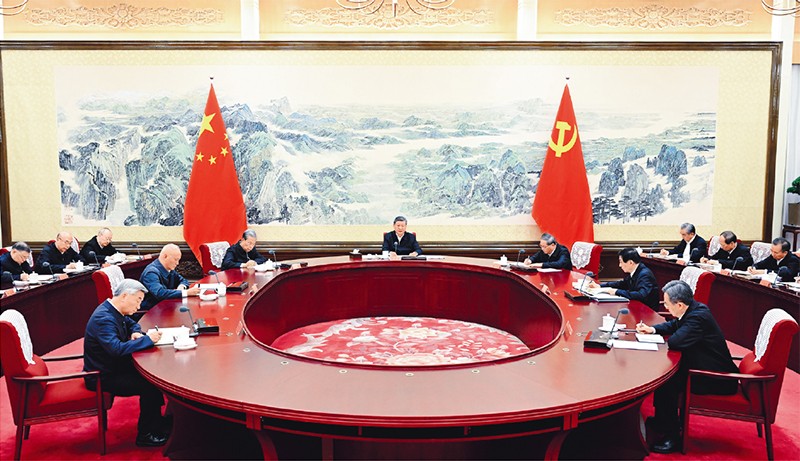
From December 25 to 26, 2025, the Political Bureau of the CPC Central Committee held a meeting on democratic life, presided over by General Secretary of the CPC Central Committee Xi Jinping, who also delivered an important speech.
The practice of thoroughly implementing the "eight-point regulation" of the CPC Central Committee demonstrates that to "confine power within a cage of regulations," we must not only refine our rules and make the "cage" tighter and more secure, but also strengthen the enforcement of these rules to ensure they serve as rigid, binding constraints. Since the 18th National Congress of the CPC, the Party Central Committee has placed great emphasis on the development of laws and regulations, enacting and revising them on an unprecedented scale to establish a relatively comprehensive system. At the same time, it must be noted that some existing regulations remain too broad or abstract, lacking sufficient specificity and practical applicability; there are gaps and loopholes where different regulations fail to align seamlessly; and the development of rules for new sectors, new business models, and new social groups has lagged behind. We must continue to refine our regulatory framework, strengthening the supply of rules to meet the practical needs of governing the Party. This entails urgently establishing regulations where none currently exist, and promptly revising or supplementing those that are incomplete or outdated—ensuring that our system is rigorous yet not overly complex, and truly effective, so as to avoid a situation where the "cage" is so loosely constructed that it fails to contain what it is meant to hold.
Over the years, we have taken a series of measures to ensure the implementation of laws, regulations, and institutional rules. Yet, in some Party organizations, these rules remain mere formalities—existing on paper but failing to function in practice—while in other areas, the capacity to enforce them weakens at each successive level of the hierarchy. The result is akin to a "paper cage" meant to contain a tiger: entirely ineffective. When explicit rules are not upheld, unwritten "hidden rules" inevitably flourish; and as these hidden rules gain sway, the formal, explicit rules are reduced to empty window dressing. Why do so many political brokers and swindlers thrive in society? It is because these hidden rules render formal regulations toothless, triggering a "broken-window effect." Some officials rely on personal connections rather than the organization, placing their faith in "guanxi" (relationships) rather than laws and discipline. If left unchecked, this leads to a scenario where "bad money drives out good" and "a personal note carries more weight than an official seal"—a dynamic that inevitably erodes the political ecosystem and breeds corruption. To curb these hidden rules, the key lies in strengthening the enforcement of explicit, formal rules. We must bolster education and advocacy regarding laws and regulations, guiding Party members and officials to understand these rules, respect them, and grasp that they serve not only as a "tightening headband" (a constraint) but also as a "protective amulet." Furthermore, we must enhance the transparency of Party and government affairs, ensuring that power is exercised in the full light of day, thereby depriving hidden rules of any foothold. We must uphold the principle that everyone is equal before the law and institutional rules—there are no privileges for anyone, and no exceptions to compliance. Those who "run red lights" or "climb over the fence" (violate rules) must be strictly investigated and punished, with those bearing leadership responsibility held firmly accountable. We must ensure that institutional regulations function as "high-voltage lines"—potent, electrified barriers that cannot be crossed with impunity.
The effectiveness of institutional implementation within any region or department hinges on the "top leader" (the principal official in charge). In the effort to cage power within institutional constraints, the primary focus must be on ensuring that these top leaders take the lead in upholding the rules. The CPC Central Committee’s guidelines on strengthening supervision over "top leaders" and leadership teams set forth clear requirements—such as upholding democratic centralism and refining the oversight mechanisms for "major decisions, important appointments, significant projects, and the use of large sums of money" (the "triple-major and one-large" policy). Members of leadership teams at all levels—especially the top leaders—must set an example by strictly adhering to these rules, while ensuring that the corresponding oversight mechanisms are also fully and effectively implemented.
III. Advancing the Anti-Corruption Struggle with Greater Clarity and Firmness
Since the 18th National Congress of the Communist Party of China, our Party has vigorously pursued self-reform and remained unswerving in its opposition to corruption. We have successfully blazed a path of anti-corruption with Chinese characteristics—one that operates under the centralized, unified leadership of the Party Central Committee, addresses both the symptoms and root causes, and integrates measures to ensure that officials dare not, cannot, and have no desire to be corrupt. We must continue firmly along this path.
At present, corruption remains prone to frequent occurrence. Facts once again confirm the accuracy of the Party Central Committee’s assessment: the situation regarding the anti-corruption struggle remains grave and complex, and the task of eradicating the soil and conditions that breed corruption remains arduous and demanding. The anti-corruption struggle is an ongoing, perpetual endeavor; it must be pursued to the end with the perseverance of Yu Gong (the old man who moved mountains) and the unyielding resolve of Jing Wei (the mythical bird that sought to fill the sea). This serves as a stark reminder that corruption poses the greatest risk, threat, and challenge to our Party—acting as a major obstacle and stumbling block to the development of the Party and the nation. If left to fester and spread, it would inevitably damage the economic environment, trigger various risks, and shake the very foundations of the Party’s governance. Experience further teaches us that the fight against corruption is a critical battle—one we cannot afford to lose and must not lose. We cannot pause for a moment, nor can we retreat a single step. Just as the verse goes, "Past the sunken ship, a thousand vessels sail; beyond the withered tree, ten thousand saplings thrive"—withered trees must be uprooted or cut down. We must "press home our advantage to pursue the fleeing foe," maintaining strategic composure and resilient fighting spirit. We must continue to conduct thorough investigations and clean-ups to root out corruption at its source. Regardless of the resistance encountered or the price that must be paid, we will carry the anti-corruption struggle through to the end! No matter who is involved, how high their position, or how significant their past contributions—if they engage in corruption, there will be absolutely no leniency!
We must maintain a high-pressure stance without wavering. We must persist in rooting out all corruption, punishing every act of graft, and ensuring that no corrupt individual has a place to hide. Efforts should focus on sectors where power is concentrated, funds are dense, and resources are abundant. We must keep a close watch on issues such as collusion between government officials and business interests, the use of power to provide protection for capital, and the infiltration of capital into the political sphere. It is essential to intensify the investigation and prosecution of corruption among "top leaders" (heads of organizations or departments) and young officials, while resolutely removing those who continue to engage in corrupt acts—unrestrained and unrepentant. We must also take firm action against those who offer bribes—especially repeat offenders or those who do so knowingly—and conduct in-depth investigations into emerging and covert forms of corruption, such as deferred-benefit arrangements, the use of nominees to hold assets, and the "revolving door" between government and business. Furthermore, we must push forward with the targeted rectification of misconduct and corruption affecting the public, while strengthening efforts to combat cross-border corruption and pursue fugitives and illicit assets. In regions or departments where major corruption cases have occurred, it is imperative to thoroughly purge the lingering negative influence and completely eradicate the source of the contamination.
We must continuously enhance the "penetrating power" of our anti-corruption efforts. By grasping new trends and characteristics of corruption, we should innovate our methods to ensure the timely detection, accurate identification, and effective governance of all forms of corruption. We must deepen the integrated investigation and treatment of "style" issues (misconduct in work style or conduct) and actual corruption—looking past the surface-level misconduct to uncover the underlying corrupt essence. This includes digging deep into cases of inaction or arbitrary action to expose the "nurturing of officials by business" and the "protection of business by officials"—essentially, the fusion of political and commercial interests. We must also thoroughly investigate the favors and illicit transfers of benefits often hidden behind unauthorized banquets, and strictly punish those who associate with political brokers or political swindlers. Moreover, we should leverage technology—such as big data—to improve the efficiency of supervision, discipline enforcement, and law enforcement. Naturally, the use of such new technological tools must be governed by strict ethical standards and data security protocols, ensuring that all actions are carried out in full compliance with regulations, disciplinary codes, and the law. Finally, we must refine the mechanisms for implementing anti-corruption responsibilities. Party committees (and leading Party members' groups) at all levels must firmly shoulder their primary responsibilities, with the Party secretary fulfilling their role as the "first person responsible." They must maintain a firm stance and a clear attitude, ensuring that all relevant parties take their own responsibilities seriously. Anti-corruption is not merely the task of the commissions for discipline inspection and supervisory commissions; every entity must truly understand, accept, and fulfill its own responsibilities.
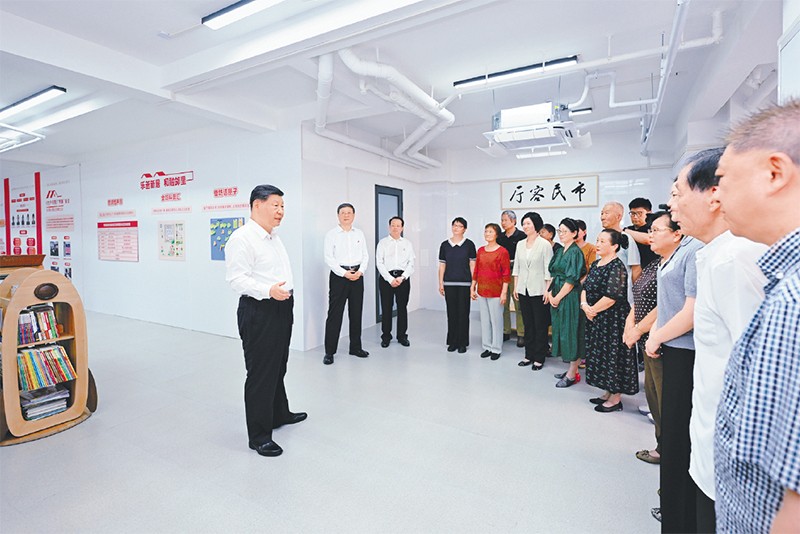
On July 15, 2026, Xi Jinping, General Secretary of the CPC Central Committee, President of the PRC, and Chairman of the Central Military Commission, conducted an inspection tour in Shanghai. While visiting the Bansongyuan Road Subdistrict’s "Citizen New Village" residential area in Huangpu District, Xi Jinping engaged in a cordial exchange with resident representatives, subdistrict officials, and community workers at the local Party-mass service station.
Greater effort must be invested in advancing the "integrated approach" to anti-corruption—ensuring that officials do not dare to be corrupt, cannot be corrupt, and have no desire to be corrupt. The core—and the challenge—lies in this "integration." It requires a systemic perspective, ensuring that efforts are synchronized, aligned in direction, and comprehensive in scope. While specific emphases may vary in practice, the components must not be decoupled or neglected; one must guard against the "phased" or "segmented" view of anti-corruption, which can undermine its overall effectiveness. Anti-corruption mechanisms should be further refined, fostering coordination across task deployment, resource allocation, operational progress, and performance evaluation. This involves integrating various forms of oversight—including the daily supervision by Party organizations, the work of discipline inspection and supervisory bodies, as well as inspections, audits, the handling of public complaints, and public opinion. By effectively wielding both the "shadowless lamp" of comprehensive oversight and the "scalpel" of decisive case investigation, we can promote integrated governance through full-chain collaboration. It is essential to leverage cases to drive reform and governance improvements: analyzing the root causes of corruption, identifying management loopholes, and utilizing typical cases for warning education—ensuring that old problems do not recur and that the price already paid does not go to waste. Personnel selection must adhere to the standards for "good cadres" in the new era; we must foster positive, healthy relationships among Party members, as well as clean and transparent relations between government officials and the business community, thereby continuously purifying the political ecosystem. Furthermore, we must strengthen the development of a culture of integrity for the new era, enhancing the relevance and effectiveness of integrity education, and fostering a social environment that values integrity, rejects corruption, promotes frugality, and opposes extravagance.
Discipline inspection and supervisory organs bear a significant responsibility and a glorious mission in advancing full and rigorous Party self-governance. They must always remain mindful of their fundamental purpose: to steadfastly uphold the unity and solidarity of the Party, and to firmly defend the Party’s advanced nature and purity. These organs must continue to advance the standardization, rule-of-law-based operation, and formalization of their work, constantly improving the quality and efficiency of their supervision, discipline enforcement, and law enforcement. Moreover, they must be prepared to "turn the blade inward"—resolutely rooting out any "black sheep" within their own ranks. In accordance with the requirements of possessing strong political, professional, and ethical standards—as well as an unblemished record of integrity—we must continuously strengthen our team, striving to forge an "iron contingent" of discipline inspection and supervision personnel who are loyal, clean, and responsible, and who possess both the courage and the skill to engage in struggle.
