


Nvidia chip delivery to China restricted, Chinese buyers may only receive 1% of orders in the short term
According to Bloomberg citing informed sources, Chinese artificial intelligence and cloud computing companies are expected to receive only a small portion of orders for advanced chips from Nvidia in the coming months. Previously, foreign media reported that Alibaba, Tencent, ByteDance and other companies had ordered about 6 million Nvidia RTX Pro 5500 chips in total. The latest news is that the delivery volume in the next four months may only be tens of thousands, accounting for about 1% of the total orders.
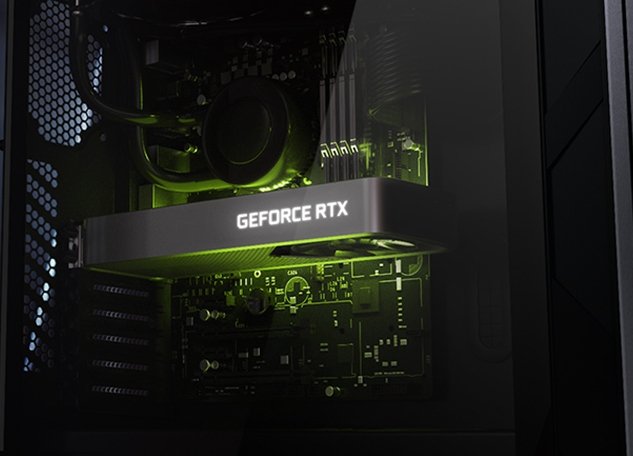
It is reported that the unit price of the chip exceeds 11000 US dollars, and the estimated total order value is about 70 billion US dollars. The large-scale procurement demand reflects the strong demand of Chinese technology companies for AI computing power, while the limited initial delivery volume also highlights the contradiction between the global shortage of advanced chip production capacity and the expansion of China's AI infrastructure.
Millions of orders are facing delivery waiting
According to insiders, the first batch of thousands of RTX Pro 5500 chips is expected to be delivered by the end of this year, and the next batch of tens of thousands of chips may arrive around February 2027. These two stages are currently confirmed delivery arrangements. According to an internal calculation by a major buyer, as Nvidia gradually increases its production capacity, large Chinese technology companies are expected to receive approximately 700000 chips by the end of 2027.
However, the final delivery quantity still depends on Nvidia's production plan. Nvidia has reminded customers that there are production scheduling conflicts between some products, and production capacity restrictions may last for a long time. The company refused to comment on specific delivery figures, and Alibaba, Tencent and ByteDance did not respond to requests for comment.
Although the RTX Pro 5500 is not Nvidia's strongest AI accelerator, it is still one of the important AI computing products available in the Chinese market. At the same time, Nvidia is investing more resources in chips with more advanced performance and higher profit margins, with American AI companies such as OpenAI and Anthropic being the main users of related products.
Nvidia's AI chips are mainly manufactured by TSMC. As Nvidia and TSMC allocate more manufacturing capacity to next-generation products such as Rubin, the supply space for the RTX Pro 5500 may continue to be squeezed. This means that even with large order volumes, Chinese customers still need to compete with other global buyers for limited wafer manufacturing, advanced packaging, and related supporting production capacity.
The overlapping policies of China and the United States affect chip supply
In addition to production capacity factors, the relevant policies of China and the United States are also affecting the sales of Nvidia chips to China. The US government has banned Nvidia from exporting its most advanced AI accelerators to China, citing concerns about the risks of artificial intelligence development and military applications. The RTX Pro 5500 is considered to have not yet reached the performance threshold for restricted products, but existing export controls still increase uncertainty in product supply and trading arrangements.
A spokesperson for Nvidia stated that American companies' business in China is still affected by export control regulations and relevant import restrictions from China. The spokesperson referred to some US regulations as "outdated" restrictions, which also involve game product rules released nearly five years ago. For a long time, Nvidia has been lobbying the US government to relax sales restrictions on China in order to maintain its business in the Chinese market.
At the same time, the Trump administration has recently lifted restrictions on some old model chips, which were previously only sold in limited quantities. The Chinese government has also released a signal that may allow Alibaba, ByteDance and other enterprises to purchase RTX Pro 5500. However, from policy approval to actual delivery, it still needs to go through multiple links such as procurement, compliance, production, and logistics, making it difficult to quickly transform into large-scale computing power supply in the short term.
The demand for domestic substitution is increasing, and the bottleneck of production capacity still needs to be overcome
In the context of tight supply from Nvidia, large Chinese technology companies may continue to increase their purchases of domestically produced AI chips. Companies such as Huawei, Cambrian, and Alibaba's Pingtouge are expected to gain more application opportunities in areas such as AI inference. The supply gap provides local manufacturers with space to expand deployment, improve software ecosystems, and validate product performance.
But domestic substitution also faces practical constraints. The restrictions imposed by the United States on advanced semiconductor manufacturing equipment and related services are affecting domestic manufacturers' efforts to increase advanced chip production capacity; The long-term shortage of high bandwidth storage also constrains the production of AI accelerators and drives up costs. Although local enterprises have made progress in chip design and product performance, they still need to continue investing in production capacity, advanced manufacturing processes, and software and hardware collaboration.
The production pressure has been partially reflected in market changes. The latest financial statements of the Cambrian period reflect the impact of limited production capacity; There are also reports that Huawei will raise the prices of some advanced accelerators by about 60% around September. In an environment of tight supply and rapidly growing demand, domestic chips may not necessarily be able to immediately fill the gap left by Nvidia products.
For Chinese AI developers, insufficient chip delivery may delay the construction of computing power clusters, increase model training and inference costs, and affect the expansion pace of some AI services. In the future, how to coordinate overseas procurement, domestic substitution, and computing power utilization efficiency will become an important issue for Chinese technology companies to promote AI business.
