

Nvidia moves light engine onto silicon intermediate layer: direction is clear, rhythm is honest
Nvidia showcased a next-generation co packaging optical technology called OOI (Optics on Interposer) at SEMICON West 2026, and prototype samples have been obtained. After the news spread, the first reaction of the capital market was not calm: some saw that "optical modules were to be replaced", while others saw that "organic substrates were sentenced to death". But if we look at the technological logic and industry pace together, the conclusion will be much more restrained: the direction pointed out by OOI is clear, but it still has a long way to go before it can change the income statement of any company.
What exactly did it change? It's not a repetition of 'light entering and copper exiting', but 'light getting closer to the core'
To understand the value of OOI, it is necessary to first see where the existing CPO has reached.
The electrical signal of traditional pluggable optical modules needs to start from the chip, pass through the PCB, connectors, and internal links of the module, with an overall loss of about 22dB. The existing CPO scheme brings the optical engine closer from the pluggable module to the organic substrate next to the switching chip, reducing the electrical signal loss to about 4dB and significantly improving energy efficiency. This is already a great progress.
But even in the CPO scheme, electrical signals still need to pass through two layers of media to complete photoelectric conversion: first through the silicon intermediate layer, then through the organic packaging substrate, and finally reach the optical engine. What OOI does is to remove the light engine from the organic substrate and directly place it on the silicon intermediate layer that carries the GPU, allowing the chip and the light engine to be directly connected through high-density, fine pitch wiring on the intermediate layer, completely bypassing the path of the organic substrate.
This idea is highly similar in logic to GPU's high-speed connection to HBM through a silicon intermediate layer: using the shortest and densest physical distance to exchange bandwidth density and energy efficiency. The synchronized display of 8-wavelength DWDM scheme does the same thing on the fiber side -8 parallel 32Gb/s channels, single fiber 256Gb/s, not relying on increasing single channel speed, but on wavelength multiplexing to increase capacity. The two are complementary, with one compressing the distance between the internal electrical interface of the package and the other increasing the capacity of the single fiber outside the package. They are not the "endgame" or "transition" of the same thing.
The real challenge is not whether it can be made, but whether it can be repaired, cooled, and profitable
The NVIDIA research team's own statement is already honest enough: OOI and DWDM are still in the research stage, and heat dissipation, manufacturing yield, and maintainability have yet to be resolved, with no commercial timeline at the moment.
These three words may seem like engineering jargon, but in the context of OOI, each one has a specific and sharp meaning.
Heat dissipation is the most intuitive contradiction. OOI has placed optical components that are extremely sensitive to temperature and computing chips that consume hundreds of watts of power on the same silicon substrate. The existing CPO has already placed the light engine next to the chip, making thermal management quite difficult; If OOI presses the distance closer, the conflict between the temperature window of the optical components and the heating curve of the computing chip will only become sharper. The wavelength drift, modulation efficiency, and long-term reliability of silicon optoelectronic devices are highly sensitive to temperature, and the space on the intermediate layer does not leave much room for thermal isolation.
Maintainability is another underestimated constraint. The pluggable module is broken, replace it with a new module and repair it at the port level. The existing CPO encapsulates the optical engine and switch chip together. Once the optical engine malfunctions, the entire device may go offline. OOI further integrates the light engine into the GPU's intermediate layer, shifting the maintenance level from "module replacement" to "dynamic packaging". In ultra large scale data centers, maintainability directly determines the total cost of ownership, which cannot be bypassed by laboratory data.
Manufacturing yield involves more fundamental economics. OOI requires the use of larger areas of silicon intermediate layers to replace some of the functions of organic substrates, and silicon intermediate layers themselves are one of the rarest and most expensive resources in advanced packaging. The cost of a single 12 inch silicon intermediate layer exceeds $100, accounting for more than half of the overall packaging cost. The supply-demand gap of CoWoS production capacity will remain at about 20% in 2026. Writing the light engine into the design rules of the silicon intermediate layer means using the most expensive silicon area to exchange for the shortest electrical channel. This account can only be calculated when the bandwidth density benefits are sufficient to cover the area cost and yield loss.
Industry rhythm: CPO is just starting, OOI is the blueprint for the "next floor"
An easily overlooked fact is that even existing CPOs are far from becoming mainstream. TrendForce estimates that in 2026, the penetration rate of CPO in optical communication modules used in AI data centers will only be about 0.5%, and there is only a chance to reach 35% by 2030. Nvidia's first generation CPO switches will not be shipped to some partners until the second half of 2026. The introduction of CPO on the Rubin platform and the expansion of Rubin Ultra for cross rack interconnection are still within the next one to two years. Copper cables will remain the most cost-effective choice for extremely short distance interconnection within cabinets until at least 2028.
That is to say, the main task of the current industry is to push the first generation CPO from "small batch shipment" to "large-scale production", and solve practical problems such as light engine yield, advanced packaging capacity, and external light source supply chain one by one. OOI is a technical reserve made in advance for the interconnection requirements of Scale up after expanding from single cabinet to cross cabinet on this main line. It points to scenarios after 2028 or even around 2030, rather than the product roadmap for 2027.
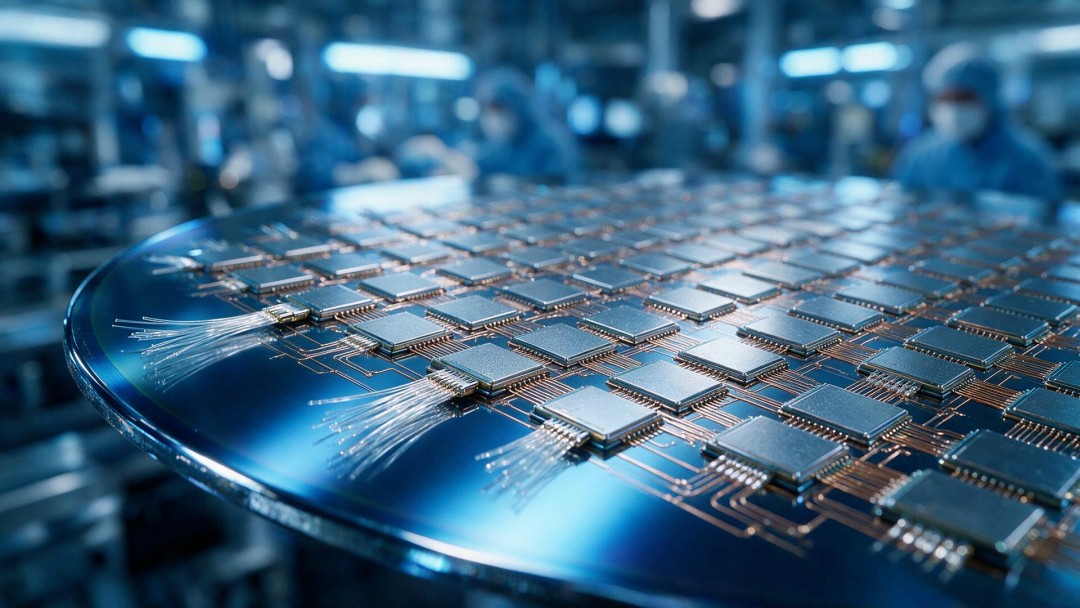
Looking at the benefit logic of the industrial chain from this perspective, the conclusion would be more straightforward than narratives like 'the fate of optical modules'. If OOI really moves towards platform level import, its value will further concentrate on both ends of advanced packaging and optical engine core devices: the production capacity, design rules, and yield of silicon intermediate layers are controlled by advanced packaging factories such as TSMC; The threshold for components such as optical engines, FAU fiber arrays, and external light sources will continue to rise; The share of traditional pluggable modules depends on the true pace of CPO penetration, rather than the impact of a prototype report. But all of this is based on the premise that the three engineering issues of heat dissipation, yield, and maintainability are solved first, and currently no timetable has been given for any of them.
In conclusion
Nvidia showcases OOI, and the truly valuable information is not 'the optical module is finished', nor 'the organic substrate is disappearing'. It conveys a more fundamental judgment: when an AI cluster moves from a single cabinet to a cross cabinet, from dozens of GPUs to hundreds of GPUs, the physical distance of electrical interconnection will eventually become a hard constraint, and approaching the chip core alone is an unavoidable direction.
Determining direction does not mean that rhythm can be skipped. The prototype sample proves that it is technically feasible, not commercially viable. Before providing answers on heat dissipation, yield, and maintainability, OOI is more suitable as a pre drawn blueprint - it tells us what the next floor will look like, but the stairs on this floor still need to be climbed step by step. For industry observers and investors, respecting engineering laws is closer to the truth than chasing prototype narratives.
