

South Korea's central bank warns that if US AI spending slows down, chip exports could shrink by billions of dollars
According to Reuters, the Bank of Korea recently warned in a written response submitted to Congressman Ahn Do geol that if large US tech companies slow down their capital expenditures in the field of artificial intelligence (AI) next year, South Korea's semiconductor exports may decrease by $50 billion to $100 billion compared to previous predictions. This assessment highlights growing concerns about South Korea's high dependence on chip exports, which account for approximately half of the country's total exports.
Pessimistic scenario calculation: GDP growth rate may be dragged down by 0.4 percentage points
The Bank of Korea evaluates the potential economic impact of US tech giants cutting aggressive infrastructure spending. In this situation, the decline in South Korea's semiconductor exports will reduce the country's gross domestic product (GDP) growth rate by about 0.4 percentage points in 2027, and make the current account surplus much lower than the central bank's initial forecast of $430 billion in 2027. This scenario also assumes a 10% decrease in the unit price of Korean semiconductor products.
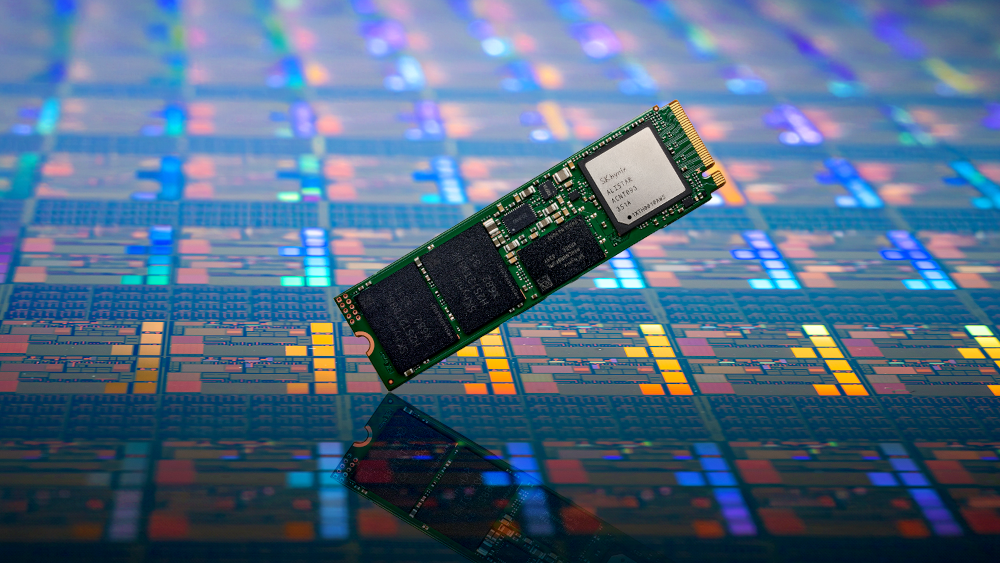
At the time of this warning, South Korea's chip exports were in a historic boom due to the AI boom. According to data from the South Korean Ministry of Industry, Trade and Resources, South Korea's exports reached 102.25 billion US dollars in June this year, a year-on-year surge of 70.9%, breaking through the 100 billion US dollar mark for the first time in history. Among them, semiconductor exports reached 44.82 billion US dollars, a year-on-year surge of 199.5%, and monthly exports reached 40 billion US dollars for the first time in history. Semiconductor exports continued to be strong in July, reaching $41 billion, a year-on-year increase of 179%, and breaking through the $40 billion mark for two consecutive months.
The core driving force behind this export boom is the explosive demand for storage chips in AI data centers. Samsung Electronics and SK Hynix, as the world's two largest memory chip manufacturers, have almost no supply for their DRAM, NAND, and high bandwidth memory (HBM) products. SK Hynix has previously announced that all of its DRAM, NAND, and HBM production capacity will be sold out by 2026, with the majority supplied to AI chip giants such as Nvidia. Market research institutions estimate that SK Hynix occupies half of the global HBM market, Samsung accounts for about a quarter, and the combined share of the two Korean companies is nearly 80%.
The 'chip dependence' of the South Korean economy is highlighted
Analysts point out that this super cycle of storage chips has deeply tied the South Korean economy to the capital expenditure rhythm of American tech giants. According to relevant reports, the combined capital expenditures of five American technology companies, Amazon, Google, Microsoft, Meta, and Oracle, have grown rapidly, from $40 billion last year to an estimated $80 billion this year, and are expected to reach $110 billion next year. In other words, the marginal changes in South Korea's semiconductor exports largely depend on the investment decisions of these few American companies.
This dependence is a double-edged sword. On the one hand, the soaring prices of storage chips have caused explosive performance for two major Korean manufacturers - Samsung Electronics' DS (Semiconductor) business unit accounted for 97.4% of the company's overall profit in the first half of 2026; On the other hand, once the wave of AI capital expenditures recedes, South Korea's exports, current account, and overall economic growth may all experience a significant decline. The Bank of Korea's "pessimistic scenario" calculation is a quantitative warning of this risk.
However, the Bank of Korea also reminds that there is still considerable uncertainty regarding the trend of AI demand and the broader business cycle of storage chips. The current storage market is in a typical upward phase, with high prices and tight production capacity. However, the storage industry has always been known for its cyclical and drastic fluctuations - the speed of demand changes far exceeds the speed of production line start-up and shutdown.
Industry insiders believe that the release of pessimistic scenario calculations by the Bank of Korea at this time is not only intended to provide risk references for parliamentary decision-making, but also implies considerations for cooling down overheated market expectations. As South Korea invests heavily in major industrial projects such as the Longin Semiconductor Cluster, how to manage the volatility risk of this pillar industry under the uncertainty of US AI capital expenditures will become an important issue for policy makers.
