

2026 China Smart Home Industry Chain Map and Investment Layout Analysis (with Full Industry Chain Panorama)
China Business Intelligence Network News: Smart homes are the core track for the application of the Internet of Things and AI technology in consumer scenarios. Its industry chain covers upstream hardware and underlying technologies, midstream smart products and whole-home intelligent systems, and downstream real estate fine decoration and retail consumer markets. With the continuous iteration of upstream components such as chips, smart sensors, controllers, and technologies like artificial intelligence, combined with the driving force of consumption upgrades and the demand for real estate fine decoration supporting facilities, the market scale is steadily expanding, and segmented categories are flourishing in multiple areas. Domestic companies are accelerating the layout of product research and development and production capacity construction, promoting the industry to enter a new stage of large-scale and scenario-based development.
1. Industrial Chain
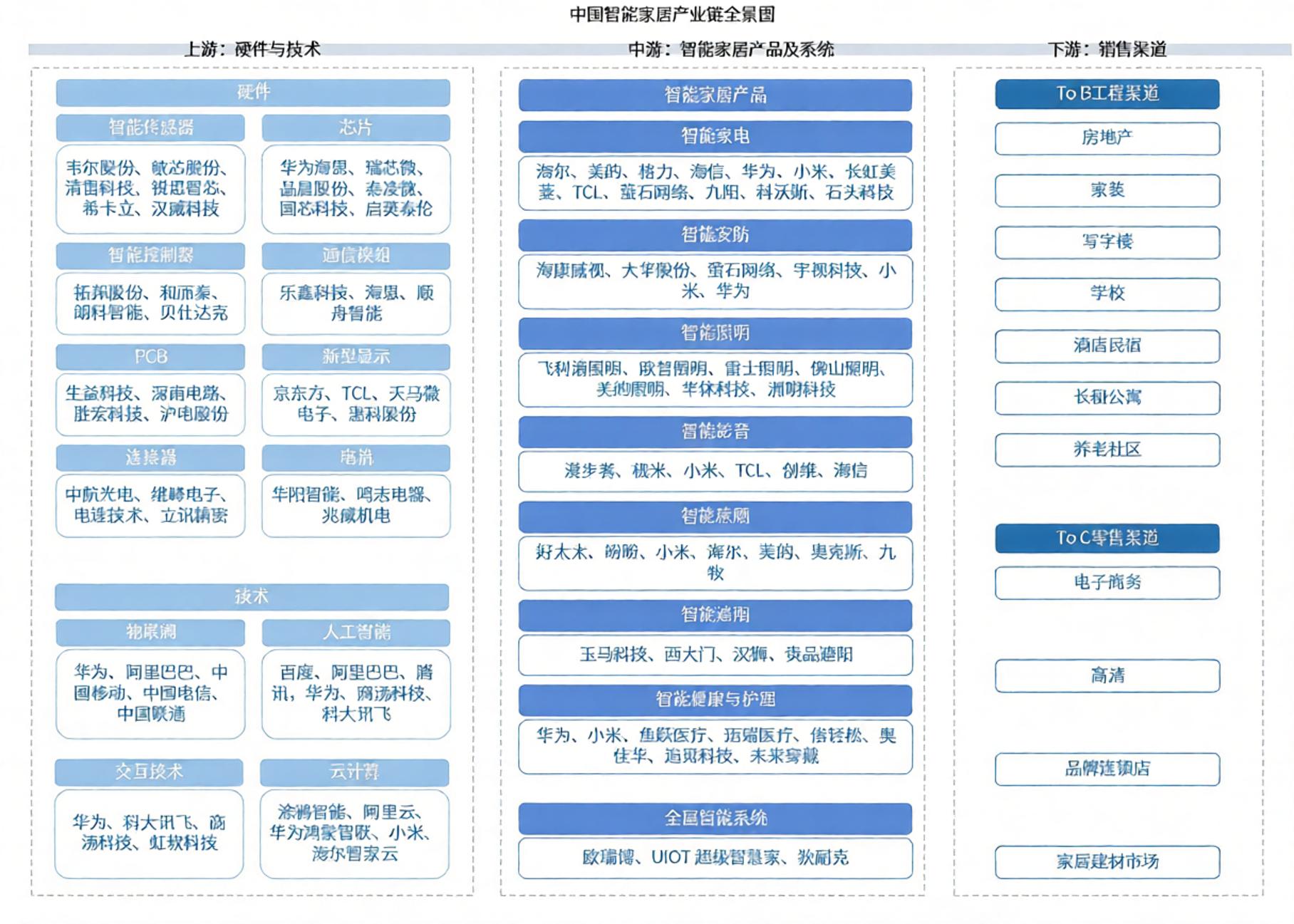
The upstream of the smart home industry chain consists of hardware and technology. Hardware includes smart sensors, chips, smart controllers, communication modules, PCBs, and motors, while technology includes the Internet of Things, artificial intelligence, interaction technology, and cloud computing. The midstream consists of smart home products and systems. Smart home products include smart appliances, smart security, smart lighting, smart audio-visual equipment, smart drying, and smart shading, while the system refers to the whole-house smart system. Sales channels are mainly divided into ToB engineering channels and ToC retail channels.
Source: Compiled by China Business Industry Research Institute
2. Upstream Analysis
1. Chip
(1) Chip Market Size
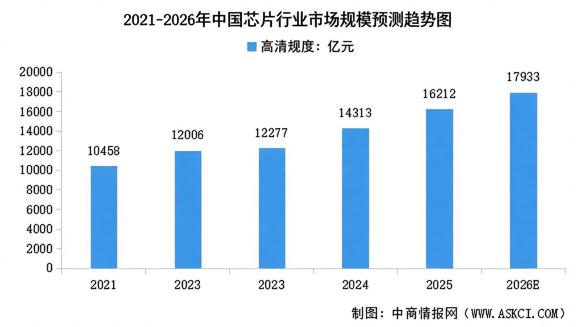
Chips are responsible for data processing, instruction control, and algorithm operation, serving as the computing power foundation for device intelligence. According to the "2026-2031 China Chip Industry Market Research Analysis and Investment Prospect Forecast Report" released by the China Business Industry Research Institute, the Chinese chip market size will grow from 1,045.8 billion yuan in 2021 to 1,431.3 billion yuan in 2024, with a compound annual growth rate of about 11%, and the market size in 2025 is expected to be about 1,621.2 billion yuan. Analysts from the China Business Industry Research Institute predict that the Chinese chip market size will reach 1,793.3 billion yuan in 2026.
Data source: Compiled by China Business Industry Research Institute
(2) Key Chip Companies
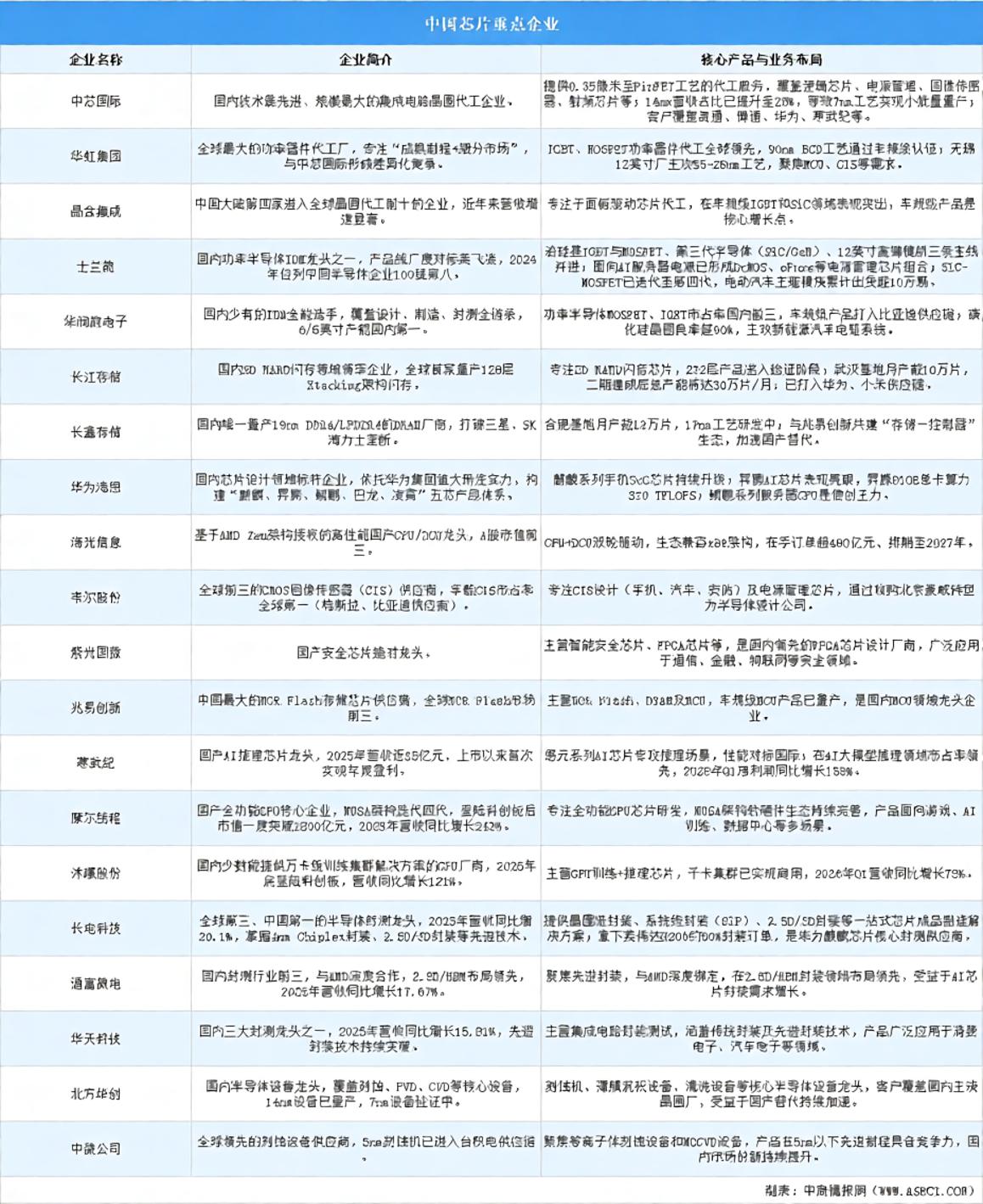
China's chip industry has developed a complete layout from design, manufacturing, and packaging and testing to equipment and materials, with key enterprises in each segment emerging with global competitiveness.
2. Intelligent Sensors
(1) Smart sensor market size
Compared with traditional sensors, smart sensors integrate information processing and control functions, showing significant advantages in measurement accuracy, operational reliability in specific application scenarios, and overall cost-effectiveness. According to the "2026-2031 China Smart Sensor Industry Outlook and Market Trend Insight Special Research Report" released by China Business Industry Research Institute, in terms of revenue, the market size of China's smart sensor industry is expected to increase from approximately 102.2 billion yuan in 2021 to about 186 billion yuan in 2025, with a compound annual growth rate of 16.2%. The growth is mainly driven by the continuous digital and intelligent upgrades in downstream industries, which expand demand for industrial automation, consumer electronics, automotive electronics, smart home, and IoT applications. In addition, advancements in import substitution products, improvements in manufacturing and packaging capabilities, and national support policies for intelligent manufacturing and key components all provide favorable conditions for industry development. Analysts at China Business Industry Research Institute predict that MEMS technology, system integration capabilities, rapid development of robotics, and continuous progress in the integration of sensing hardware and intelligent algorithms will further enhance the importance of smart sensors in various application fields. It is expected that by 2026, the market size of China's smart sensor industry will exceed 210 billion yuan.
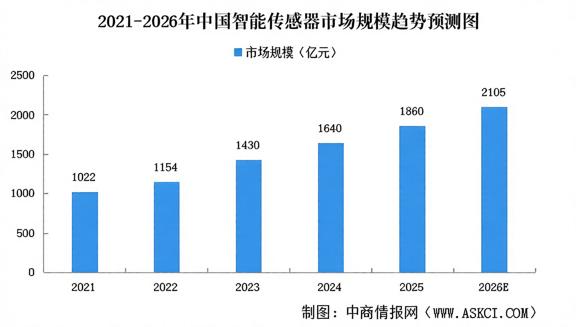
Data source: Frost & Sullivan, compiled by China Business Industry Research Institute
(2) Key Companies in the Smart Sensor Industry
China's smart sensor industry has formed a complete competitive landscape covering multiple fields such as image perception, MEMS, infrared, acoustics, 3D vision, mechanics, gas, and automotive electronics, with a number of leading enterprises with global competitiveness emerging.
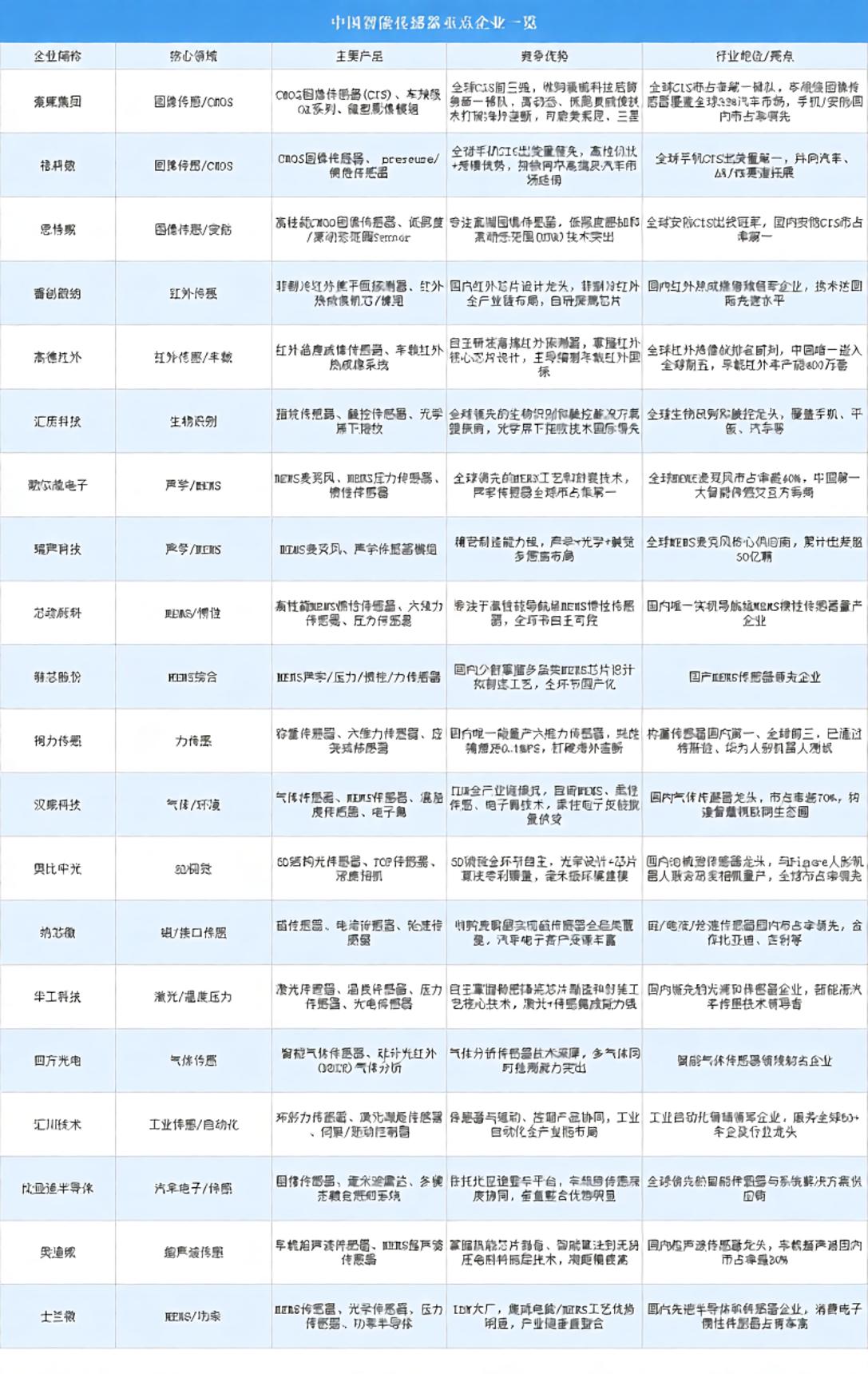
Source: Compiled by China Business Industry Research Institute
3. Intelligent Controller
(1) Smart Controller Market Size
China's intelligent controller industry started relatively late, but it has developed rapidly in recent years, with the market growing quickly. The '2026-2031 China Intelligent Controller Market Survey and Industry Outlook Forecast Special Research Report' released by the China Business Industry Research Institute shows that the market size of China's intelligent controllers was approximately 4,282.6 billion yuan in 2025. Analysts from the China Business Industry Research Institute predict that the market size of China's intelligent controllers will reach 4,752.1 billion yuan in 2026.
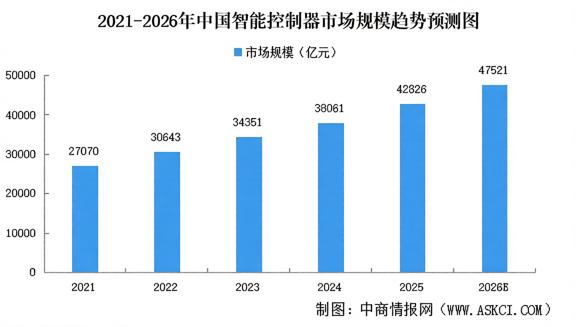
Data source: Compiled by China Business Industry Research Institute
(2) Key Companies in the Intelligent Controller Industry
China's intelligent controller industry has formed a global leading advantage. Leading companies with revenues in the billions, represented by Topband Co., Ltd. and H&T Intelligent Control, maintain their position as the country's 'dual giants.' Both have built systematic competitive barriers through strong customer loyalty, integrated technology platforms, and global manufacturing layouts. Inochi Technology and Desay SV, on the other hand, lead in vertical sectors such as industrial automation and new energy drive control, as well as intelligent cockpits and domain controllers for driving. The former ranks first among domestic companies in the general servo and low-voltage inverter market, while the latter leads the domestic market in intelligent driving domain controllers. In addition, enterprises such as Zhenbang Intelligence, Hejing Technology, Langke Intelligence, and Ruide Intelligence each have distinctive advantages in smart appliances, automotive electronics, robotics, and new energy-related controllers, consolidating their positions in niche markets through the 'Three Electric One Cloud' technology system, accumulation of frequency conversion control technology, flexible production models, and leading brand supply chain advantages. Bestdac, Yingtang Intelligent Control, and Magmet continue to expand in sectors such as motor control, household appliances, and variable-frequency home appliances through patent barriers, deployment in automotive chips, and industrial-grade technology integration capabilities.
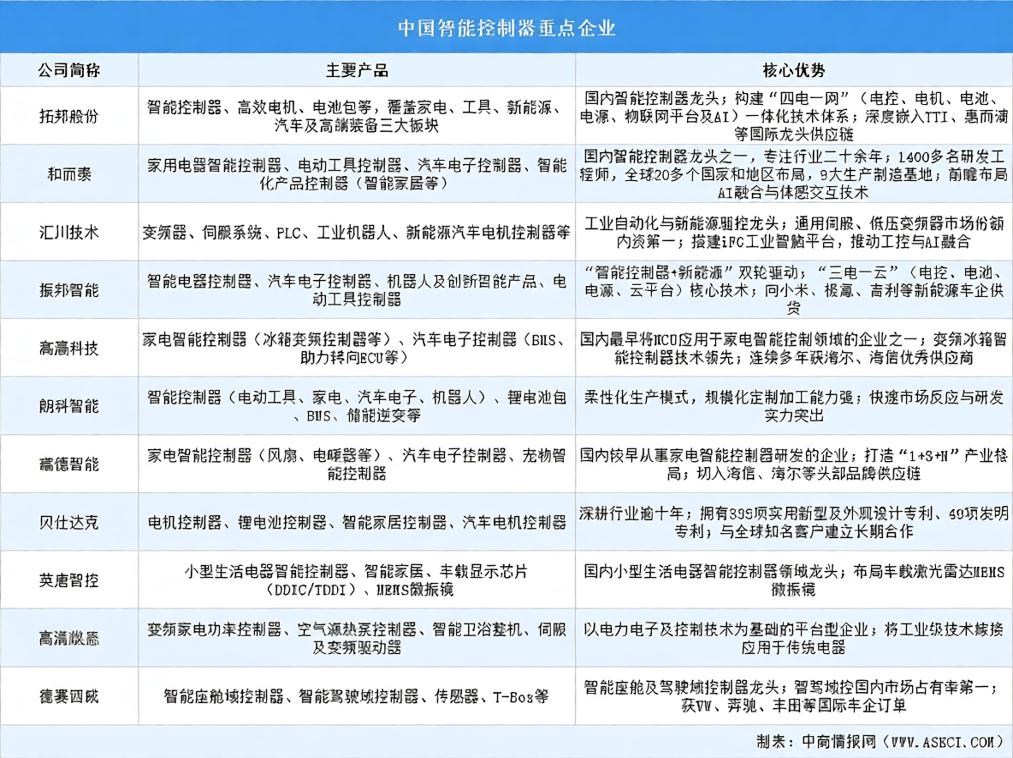
Source: Compiled by China Business Industry Research Institute
4. Cloud Computing
(1) Cloud Computing Market Size
On the basis of years of rapid development, China's cloud computing industry is entering a new stage of technological integration and deepened application, driving continuous high-speed growth in market scale. The "2026-2031 China Cloud Computing Industry In-Depth Analysis and Development Trend Forecast Research Report" released by the China Business Industry Research Institute shows that in 2024, the market size of China's cloud computing industry reached 828.8 billion yuan, an increase of 34.44% over the previous year, and the market size in 2025 is expected to be about 1,085.7 billion yuan. Analysts from the China Business Industry Research Institute predict that the market size of China's cloud computing industry will reach 1,398.6 billion yuan in 2026.
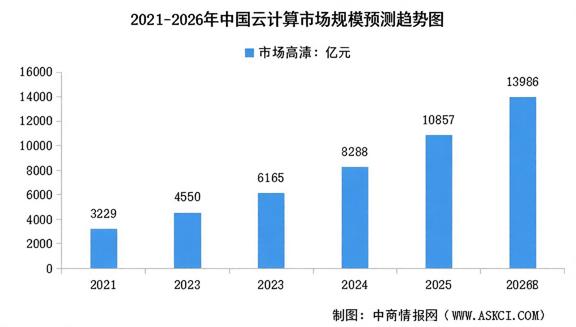
Data source: China Academy of Information and Communications Technology, compiled by China Business Industry Research Institute
(2) Cloud Computing Competitive Landscape
Driven by strong AI cloud demand, Alibaba Cloud's IaaS public cloud market share rose from 30.1% in 2024 to 32.8% in 2025, a significant increase of 2.7 percentage points, firmly maintaining its leading position in the Chinese market. Huawei Cloud and Tencent Cloud accounted for 13.6% and 9.1% respectively.
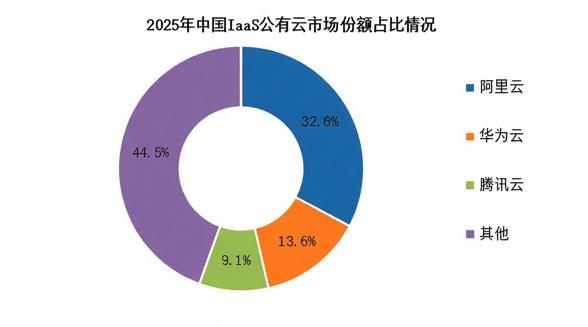
Data source: Compiled by Gartner and China Business Industry Research Institute
3. Midstream Analysis
1. Shipments of smart home devices
Driven by national subsidy policies, the shipment volume of smart home devices in China has been rising steadily. The "2026-2031 Market Research and Investment Prospect Forecast Report on the Smart Home Industry" released by China Business Industry Research Institute shows that in 2025, China's smart home device shipments will reach 279 million units, a year-on-year increase of over 4%. In 2026, the Chinese smart home device market is expected to ship 300 million units, a year-on-year growth of 8.8%.
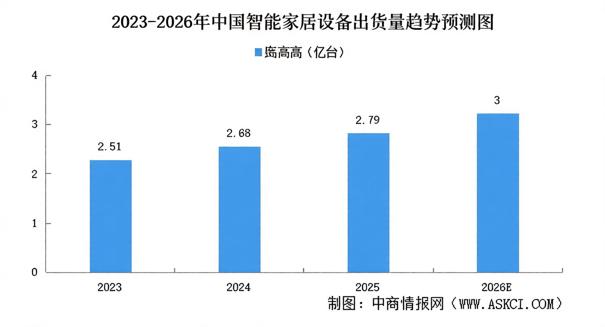
Data source: Compiled by IDC and China Business Industry Research Institute
2. Smart Home Market Size
The market size of China's smart home industry shows a trend of continuous and steady growth. According to the '2026-2031 Smart Home Industry Market Research and Investment Prospect Forecast Report' released by China Business Industry Research Institute, the size of China's smart home market will be 888.01 billion yuan in 2025, a year-on-year increase of 6.9%. It is expected that the market size will reach 958.83 billion yuan in 2026 and increase to 1,143.28 billion yuan by 2029.
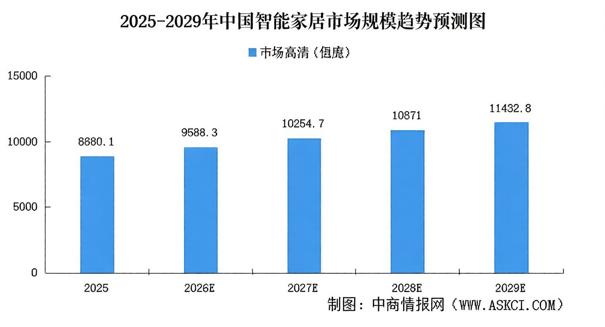
Data source: Compiled by China Business Industry Research Institute
3. Smart Home Market Structure
Smart home appliances, smart lighting, and home security monitoring are the core categories leading the smart home market. In 2025, the shipment volume of smart home appliances, smart lighting, and home security monitoring in China will account for 36.84%, 22.37%, and 17.11% of the total smart home market, respectively.
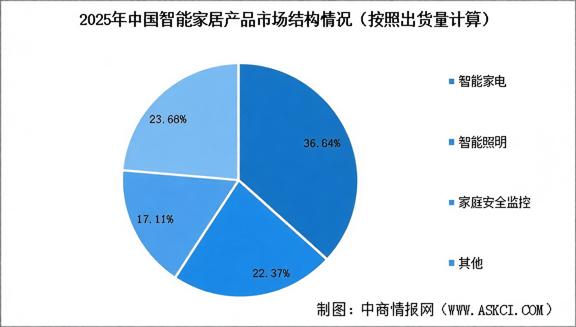
Data source: Compiled by China Business Industry Research Institute
4. Smart Home Submarkets
(1) Smart Home Appliance Market Size
Driven by both consumption upgrades and technological iterations, the scale of China's smart home appliance market has maintained steady annual growth. According to the "2026-2031 China Smart Home Appliance Industry In-Depth Research and Development Prospect Investment Forecast Analysis Report" released by the China Business Industry Research Institute, the scale of China's smart home appliance market reached 756 billion yuan in 2024, a year-on-year increase of 3%, and the market scale in 2025 is expected to be approximately 793.8 billion yuan. Analysts at the China Business Industry Research Institute predict that the scale of China's smart home appliance market will reach 833.5 billion yuan in 2026.
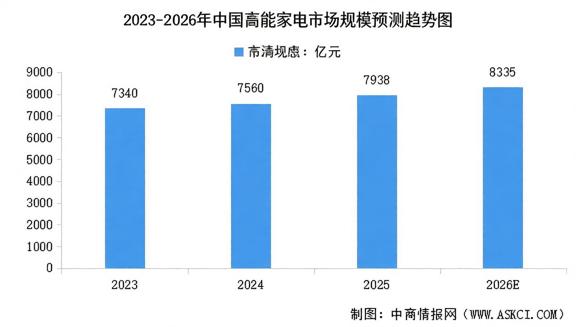
Data source: Compiled by China Business Industry Research Institute
(2) Smart Lighting
As the wave of the Internet of Things and artificial intelligence sweeps across the globe, and as the 'dual-carbon' strategy becomes a defining topic of the era, smart lighting has evolved from a single functional product into a 'bond of light' connecting technology, humanity, and ecology. In recent years, the smart lighting market has continued to expand. The '2026-2031 China Smart Lighting Industry Market Research and Development Trend Forecast Report' released by the China Business Industry Research Institute shows that in 2025, the market size of smart lighting in China will reach 48.6 billion yuan. With the continuous development of smart home and IoT technologies, the smart lighting market is expected to usher in a broader development space. Analysts from the China Business Industry Research Institute predict that by 2026, the market size of smart lighting in China is expected to reach 51.2 billion yuan.
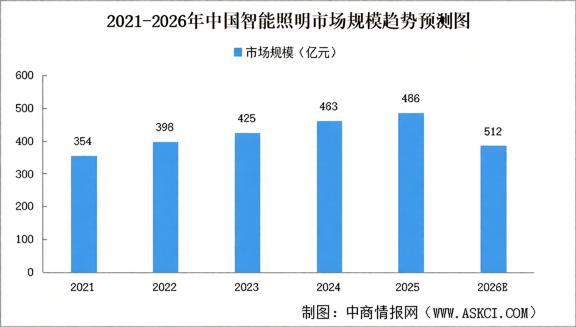
Data source: Compiled by China Business Industry Research Institute
China's smart lighting market is in a rapid growth phase, with shipments steadily increasing, showing strong market vitality. The '2026-2031 Global and China Smart Lighting Market Survey and Industry Outlook Forecast Special Research Report' released by the China Business Industry Research Institute shows that in 2025, China's smart lighting market shipments will reach 47.05 million units. Analysts from the China Business Industry Research Institute predict that in 2026, China's smart lighting market shipments will reach 54.49 million units.
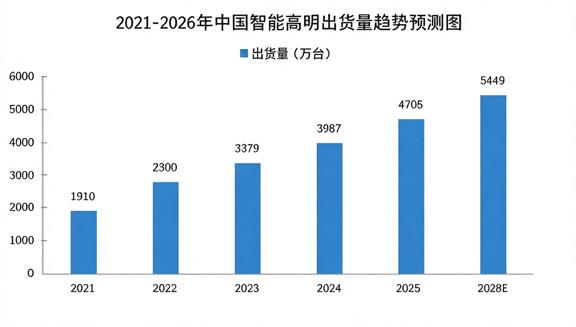
Data source: Compiled by IDC and China Business Industry Research Institute
(3) Intelligent Security
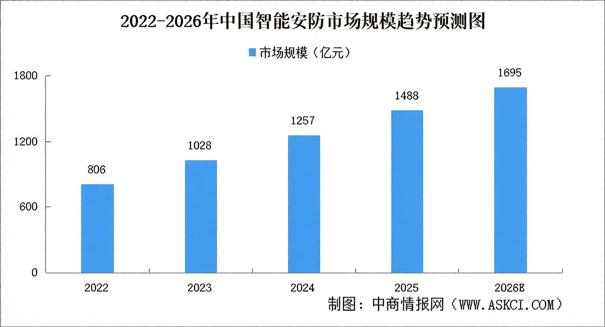
With the advancement of projects such as smart cities and intelligent homes, as well as the improvement of social security awareness, the demand for the smart security market continues to grow, and the market size is steadily increasing. According to the "2026-2031 Market Research and Investment Prospect Forecast Report of the Smart Security Industry" released by the China Business Industry Research Institute, the market size of China's smart security sector will reach 148.8 billion yuan in 2025. Analysts from the China Business Industry Research Institute predict that by 2026, China's smart security market will approach 170 billion yuan.
Data source: Compiled by China Business Industry Research Institute
5. Key Companies in Smart Home
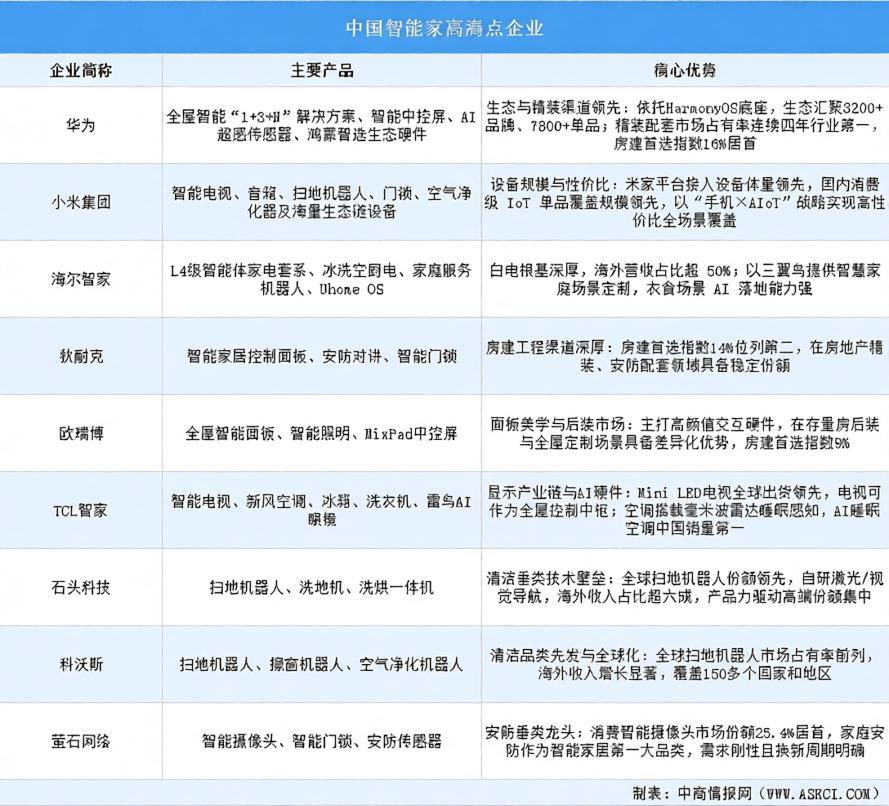
The smart home market has gathered a group of key domestic enterprises, each with distinctive characteristics and prominent advantages, showing a pattern of diverse competition and differentiated development. Huawei relies on the HarmonyOS system to create the whole-house smart "1 3 N" solution, with abundant ecological resources and significant advantages in refined decoration channels; Xiaomi uses the Mijia IoT platform as a carrier, achieving large-scale consumer-grade smart hardware coverage with high cost performance; Haier Smart Home focuses on its home appliance main business, relying on the Three-winged Bird to implement scenario-based customization, with mature overseas market layout; TCL Smart Home relies on the display industry chain, using televisions as the central hub for whole-house control, with AI sleep air conditioners forming a distinctive product advantage; Roborock and Ecovacs build technical barriers in the cleaning robot sector, with outstanding results in global layout; Ezviz Networks is rooted in home security, with smart cameras maintaining a leading domestic position.
Source: Compiled by China Business Industry Research Institute
6. Smart Home Projects Under Construction
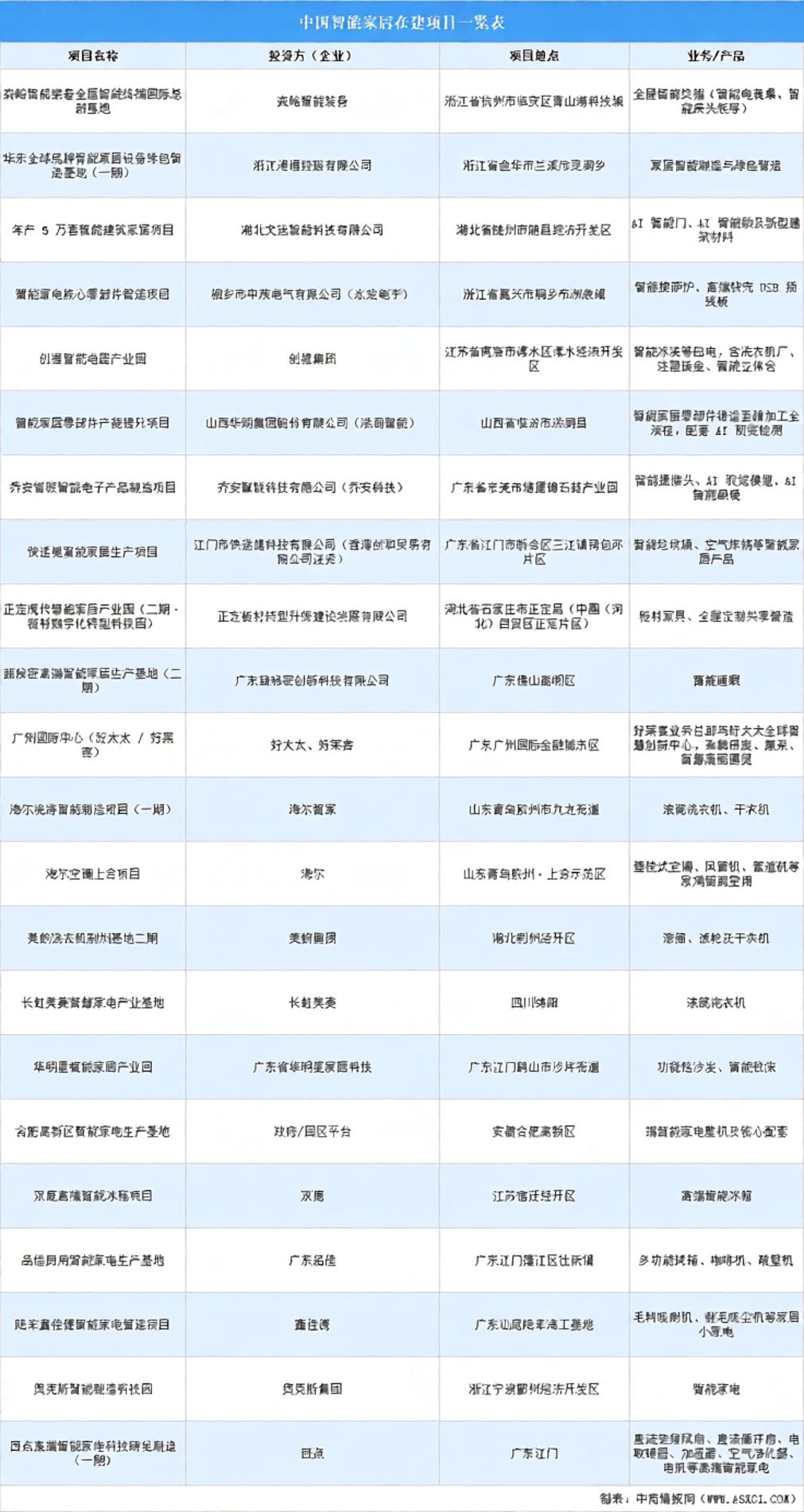
Currently, domestic smart home projects are actively being developed, with projects concentrated in the Pearl River Delta and Yangtze River Delta, while also extending to regions such as Hubei, Shandong, Shanxi, Sichuan, and Hebei. Leading home appliance companies like Haier, Midea, Skyworth, and Aux are increasing investment in smart white goods and complete machine manufacturing. At the same time, specialized leaders such as HaaTaaTaa, HOLIKE, Sweet Secret, and Qiaoan Zhilian are deploying headquarters and R&D centers for whole-house intelligence, smart sleep, security cameras, and whole-house customization. Additionally, companies like Senyu Intelligent, WeRide Intelligent, and Huasang Group are focusing on smart terminals, smart locks, precision processing of components, and AI visual inspection, among other supporting links. The products cover categories such as smart refrigerators and washing machines, air conditioners, kitchen appliances, environmental appliances, smart locks, smart cameras, smart beds, whole-house smart terminals, and smart home components.
Source: Compiled by China Business Industry Research Institute
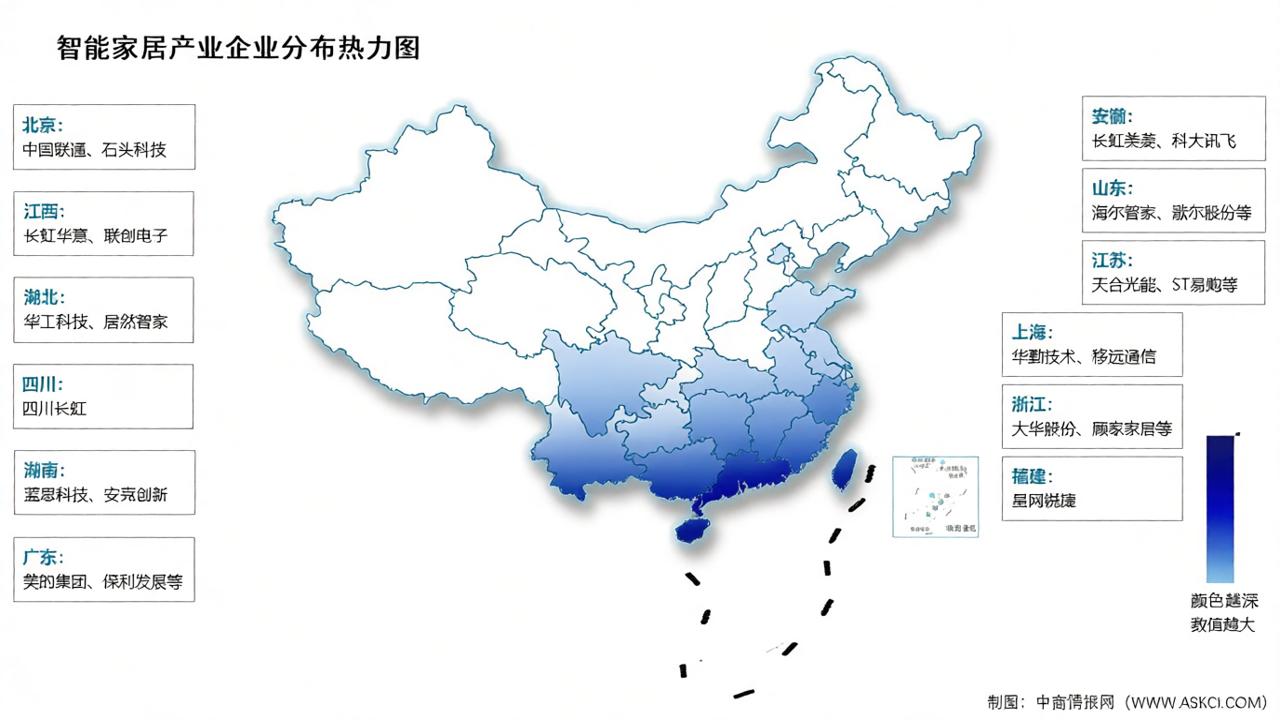
7. Heat Map of Smart Home Companies
Source: Compiled by China Business Industry Research Institute
4. Downstream Analysis
1. Scale of Smart Home System Support in the High-End Renovation Market
In 2025, the number of opening projects in China's smart home system turnkey market was 485, a year-on-year increase of 23.4%, with a supporting scale of 207,900 units, a year-on-year increase of 5.9%. Analysts from the China Business Industry Research Institute predict that in 2026, the number of opening projects in China's smart home system turnkey market will be 524, with a supporting scale of 215,600 units.
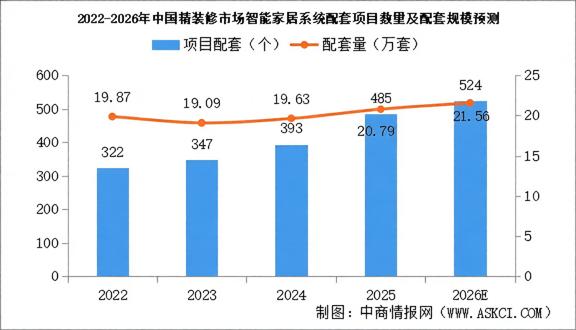
Data source: AVIC Cloud Network, compiled by China Business Industry Research Institute
2. Smart Home User Analysis
Consumers show a positive attitude towards smart homes. Data shows that 46% of respondents explicitly stated that they 'want to try high-tech home products,' and 36% of people said they would consider updating if the budget is reasonable.
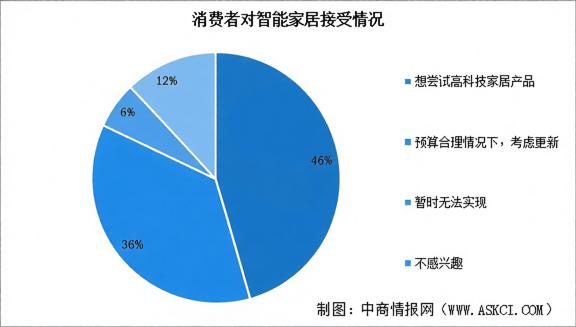
Data source: Compiled by China Business Industry Research Institute
