


A server power supply is a dedicated power source that provides stable and reliable power for servers. Unlike ordinary computer power supplies, its biggest feature is high reliability—it must support servers running 24/7 24× without interruption.
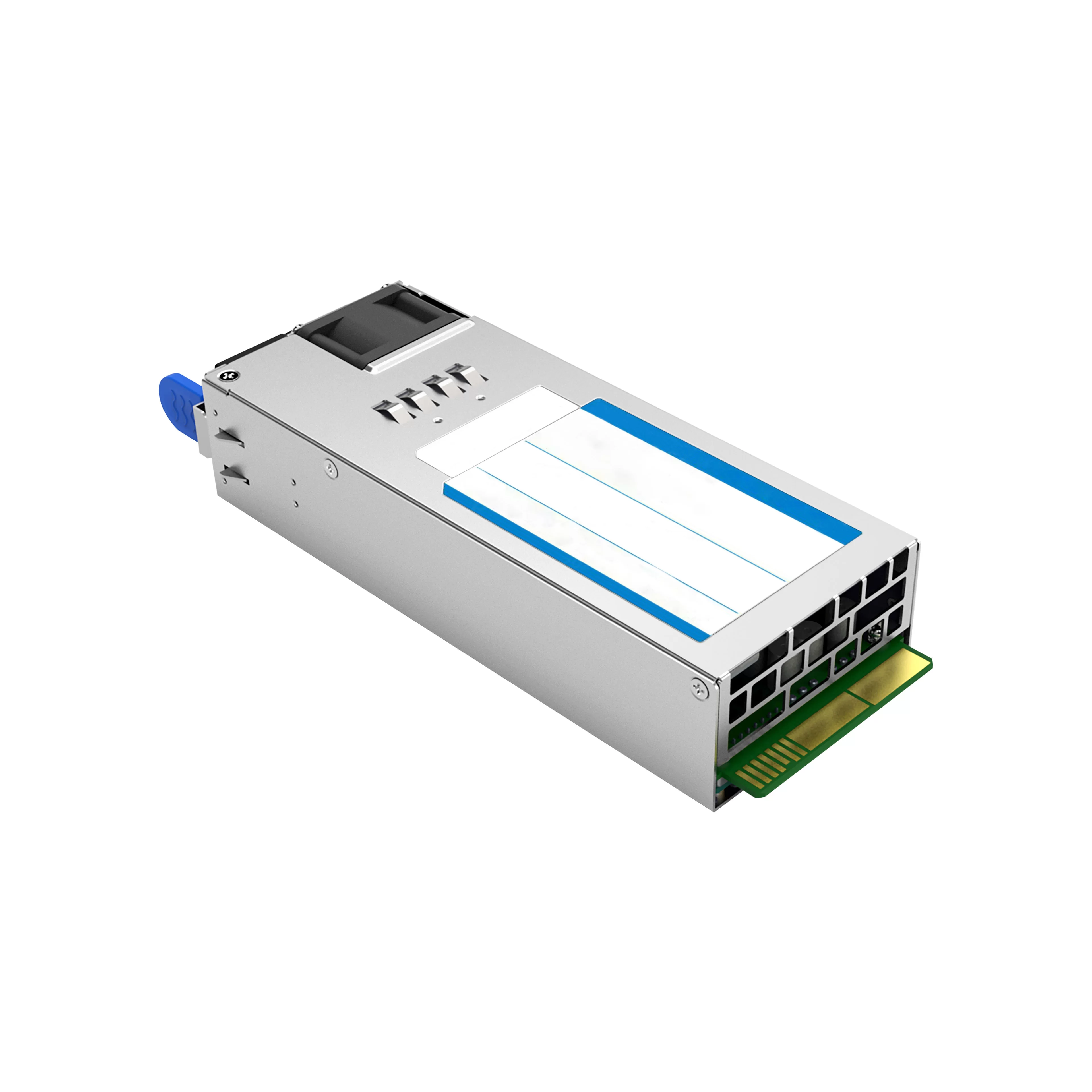
Its core design revolves around three key words: redundancy, efficiency, and management.
1. Redundancy and Hot Swapping: The key to 24×7/7 uninterruption
This is the core feature of a server power supply.
N+N or N+1 redundancy: The common "1+1" redundancy in data centers means two power supplies are working simultaneously. When one unit breaks, another immediately takes over, with zero business interruption.
Hot swapping: If the power supply is broken, you don't need to turn it off; just unplug it and replace it like a USB drive.
Current balancing technology: Under normal conditions, each power supply bears 50% of the current; if one fails, the other automatically takes on 100%, ensuring no overload trip.
2. Standards and Forms: CRPS has become mainstream
For generalization, server power supplies follow a unified size standard, with CRPS currently mainstream:
Unified size: 73.5 × 185 × 40 mm. Regardless of brand, as long as it meets the standard, it can be interchanged.
Flexible configuration: A 2U case can fit 2-4 units inside, meeting power demands ranging from several hundred watts to several kilowatts.
3. Efficiency and Energy Efficiency: Sprinting toward 98%.
The number of servers is huge, and for every 1% increase in efficiency, the electricity savings are substantial.
80 PLUS Certification: This is a common energy efficiency standard, with Titanium grade requiring half-load efficiency exceeding 94%.
The new national standard is stricter: China's latest GB 20943-2025 standard requires AI servers to achieve an efficiency of up to 98% under 50% load, which is an industry-leading level.
Technical support: achieving such high efficiency cannot be achieved without new semiconductor materials like gallium nitride and silicon carbide.
4. Intelligent management: visible power supply
Through the PMBus protocol, administrators can see in real time on their computer:
Operating status: real-time power consumption, voltage, current, temperature.
Fault warning: Proactively tells you which power supply is about to fail, rather than waiting until it breaks to find out.
The core of the charging pile power supply is the charging module, which determines charging speed and device cost. Unlike server power supplies that pursue "non-shutdown," the core of charging pile power supplies is efficient energy conversion, converting grid AC power into the DC power required by the battery.

Currently, mainstream DC fast charging modules use a two-stage architecture of "AC-DC + DC-DC."
AC-DC (Pre-stage PFC): Mainly responsible for rectification and quenching and conditioning. It converts AC power from the grid into DC, and by correcting the current waveform to follow the voltage waveform, it improves energy utilization. The mainstream topology is three-phase Vienna or active rectification.
DC-DC (Power Stage): Mainly responsible for voltage transformation and isolation. It precisely regulates the preamplifier's 800V DC voltage into 200V-1000V DC output for battery charging, while ensuring safety through a high-frequency transformer. The mainstream technology is LLC or Dual Active Bridge (DAB).
Base station power is the core infrastructure to ensure that communication networks "never lose power." It is mainly responsible for converting unstable mains or backup energy into stable DC power that communication devices can directly use, and seamlessly switching to battery power supply during grid power outages.
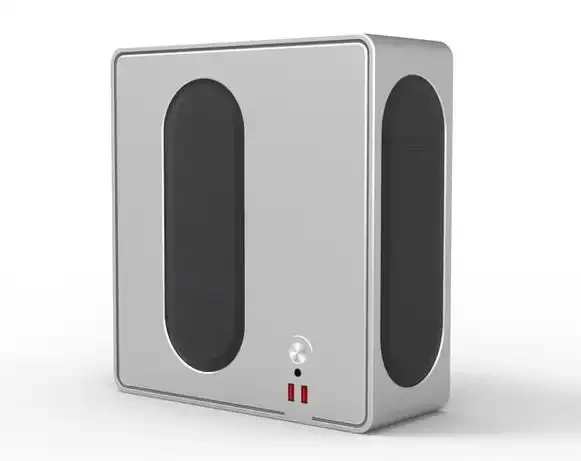
Unlike server power supplies that pursue extreme efficiency, the core requirements of base station power supplies are high reliability, wide environmental adaptability, and intelligent management.
Core architecture: from mains power to equipment
A typical base station power system consists of four core components that work together:
AC distribution unit: responsible for introducing mains power (usually requiring 380V three-phase or 220V single-phase, with base station reserved capacity above 50kW), and providing first-level lightning protection and leakage protection.
Rectifier module: This is the core of the system. It converts AC into -48V DC (mainstream voltage level) required by communication equipment standards. Modern modules generally require efficiency of ≥97% and support hot-swappable for easy maintenance and expansion.
DC Distribution Unit: Safely and controllably distributes the -48V electrical energy output from the rectifier module or battery to the base station's main equipment (BBU), transmission equipment (PTN), and RRU loads through fuses or circuit breakers.
Backup battery pack: typically consists of 24 2V lead-acid or lithium batteries connected in series, with a total voltage of about 48V. When mains power is normally in float charging mode, once power is lost, it must seamlessly switch to power supply within 0ms to ensure uninterrupted service.
Tel: 0755-83740539Email: sales@consmart.cn
Copyright © 2026 深圳市智联纬创科技有限公司版权所有 粤ICP备2026078933号Privacy PolicySitemapTechnical Support:Yibaixun - Shenzhen Web Development
