


Counterpoint: Storage costs soar, India's high-end flagship phones to increase by over 30% by the end of 2026 compared to 2025
According to a Counterpoint Research report, driven by AI data center demand and continuous price increases for DRAM and NAND, the price threshold for high-end flagship smartphones in India has been forced to move from the original 50,000 to 70,000 rupees (note: current exchange rate approximately 3,566 to 4,993 RMB) range to 100,000 rupees (current exchange rate about 7,132 RMB) or above.
The share of storage in the smartphone material cost (BOM) has risen from about 13% at the beginning of 2025 to over 40%, forcing manufacturers to readjust product specifications, component selection, and overall pricing strategies.
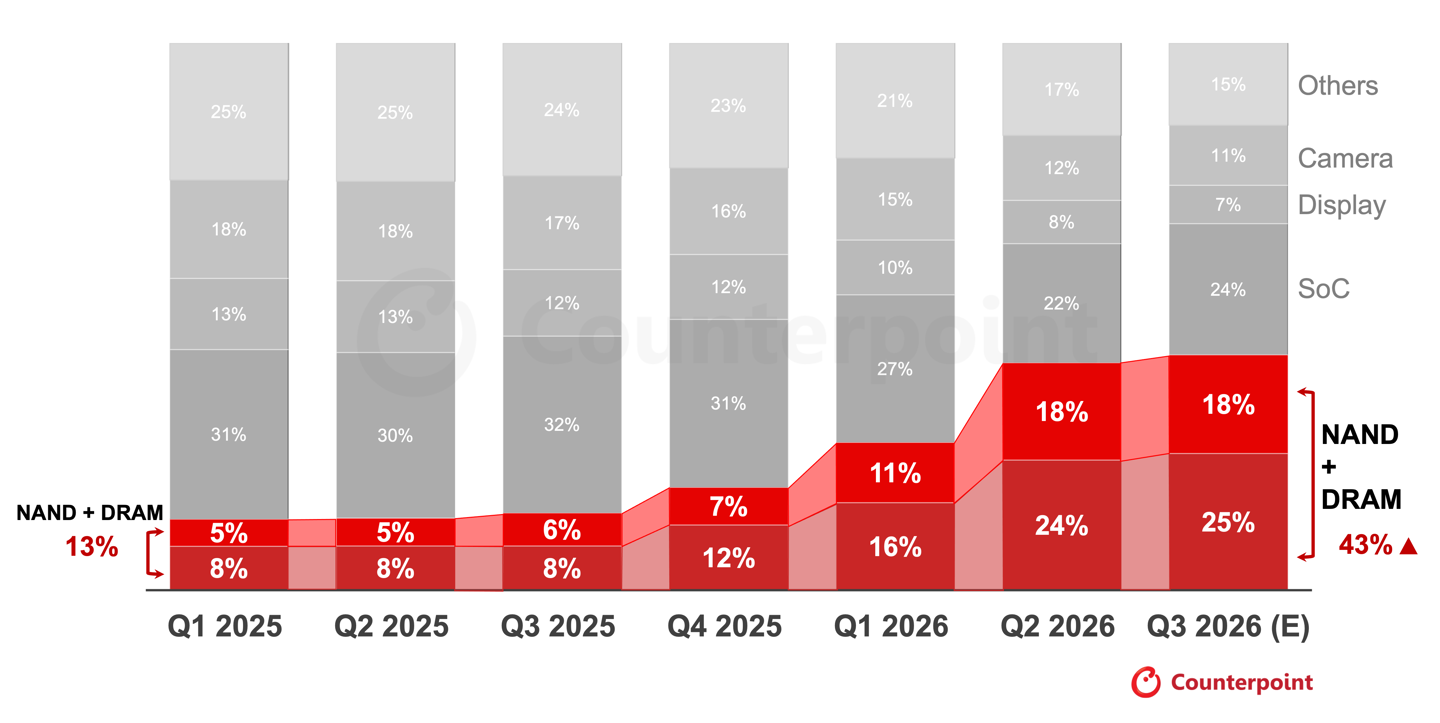
A few years ago, flagship phones priced above 100,000 rupees were still rare in the Indian market, but now, as flagship prices continue to rise, this price range is becoming increasingly common. Counterpoint expects that by the end of 2026, prices for high-end flagship phones will rise by more than 30% compared to 2025.
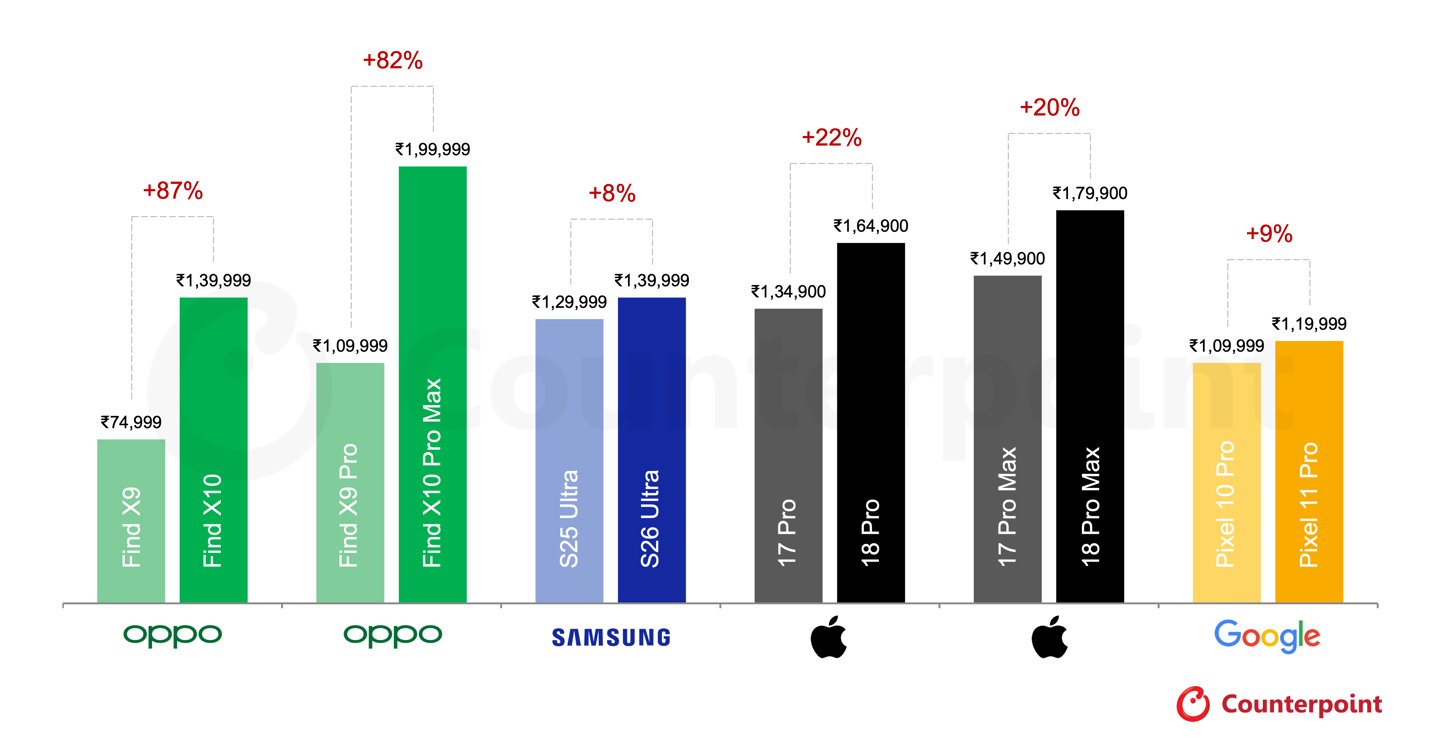
As flagship models generally enter the price range above 100,000 rupees, brand appeal alone is no longer enough to impress consumers. Users no longer focus solely on brand identity but expect substantial improvements in performance, imaging, battery, software, and overall user experience, matching higher purchase investments.
Tech-driven brands like iQOO and Google are launching flagship models with balanced configurations. These products not only offer longer lifespans but also offer a user experience close to the 200,000 rupees (approximately 14,265 RMB at current exchange rates).
Counterpoint points out that at prices above 100,000 rupees, the flagship experience consumers truly expect covers seven core dimensions:
• Processor and performanceConsumers focus more on sustained performance and multitasking smoothness rather than just benchmark numbers;
• Screen qualityHigh resolution, high refresh rate, peak brightness, and color accuracy together determine the display experience;
• Imaging capabilitiesPractical telephoto lenses, ultra-wide lenses, low-light shooting performance, and advanced image processing algorithms are more valuable than simply stacking pixels. iQOO, vivo, and OPPO all equip flagship imaging systems at this tier;
• Battery and chargingLong-lasting battery life and fast charging are the foundation for high-intensity, all-day use;
• Software and long-term update supportA clean system interface, practical AI features, and long-term system maintenance are key;
• Build quality and durabilityHigh-end materials, dustproof and waterproof capabilities, and hardware reliability determine whether the equipment can remain stable for years of use;
• After-sales serviceAn extensive service network, original spare parts, and reliable repair support are key to strengthening consumer trust.
Counterpoint also mentioned that there is no "best flagship" suitable for all users, and different consumers have noticeably different priorities. As flagship prices of Apple and Samsung gradually approach 200,000 rupees, technology-driven brands like iQOO and Google are attracting users with comparable hardware configurations and more competitive prices.
Beyond hardware, ecosystem flexibility is becoming a new differentiating advantage, especially for professionals who carry multiple phones and laptops simultaneously. When consumers no longer simply pay for brand premiums but instead value technical strength and overall user experience, such technology-driven brands will gain greater growth potential in the high-end market.
